The Dynamics of The Night Watch
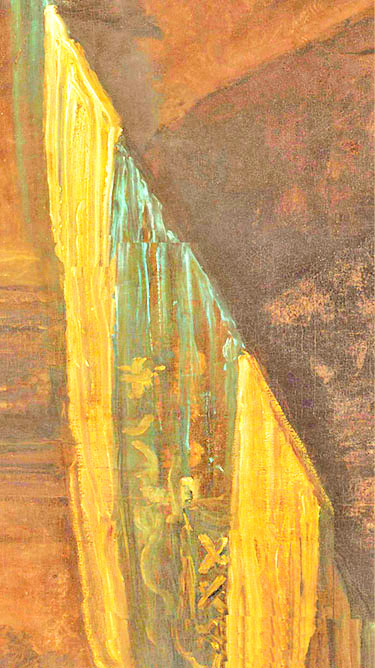
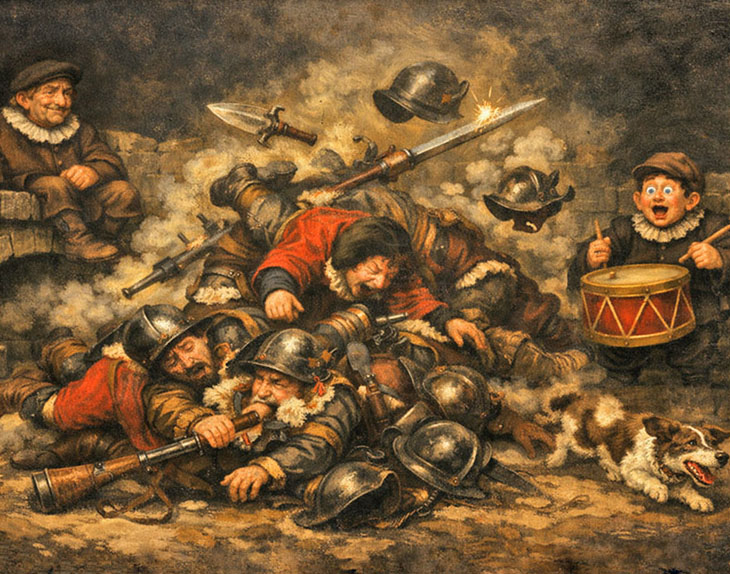
1st: Home; 2nd: The Night Watch Chaos.
Many articles describe The Night Watch in microscopic detail: its canvas, pigments, trimming, restorations, and Rembrandt’s biography. Modern imaging allows us to zoom into the painting at near-atomic resolution:
lots of pixels, but little personage.
Far less has been written about how and why Rembrandt combined his individual sketches of these civic guards (for the most part very wealthy men dressed in vintage finery) into a snapshot of a highly dynamic event.
Beyond its chiaroscuro, The Night Watch is unique for its movement. Rembrandt broke with the tradition of static militia portraits by introducing multiple conflicting actions and overlapping moments in time.
The musket firing03 in the center is incompatible with the marching and drumming.
Two girls run down the steps toward the captain of arms20, who is descending with a massive two-handed sword held only in his left hand, using his right for balance or self-defense to protect him from the musket fire in font of him.
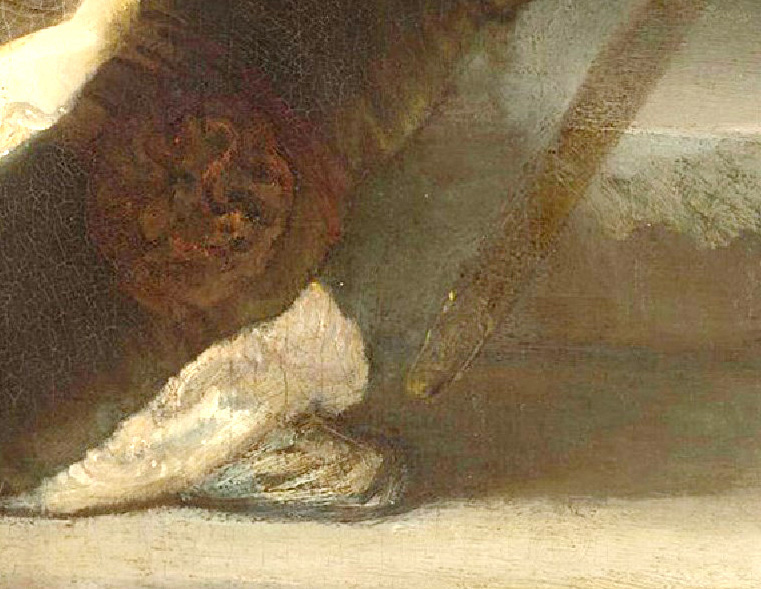
The first girl09, carrying an expensive crystal goblet, is about to trip over the fork rest of the musketeer who has just fired.
The captain16 and his lieutenant21 stride toward the illuminated center. A musketeer23 beside them blows gunpowder from the flash pan of his musket on his glowing wicks, not paying any attention to what happens around him. Behind them, a pikeman22 lifts his lance, blocking several others.
The sergeant27 on the right advances with his halberd in attack position. The ensign12 has just swung his enormous flag which he holds at the very end; a pose that makes descending the steps nearly impossible.
Meanwhile, the sergeant on the left sits calmly on the bridge, waiting for the rear guards to pass. The unknown musketeer behind him holds his gun at rest. He is not going anywhere.
A musketeer in red07 walks forward while loading gunpowder — ignoring every safety rule in Jacob de Gheyn II’s 1607 weapon manual. Rembrandt knew de Gheyn’s work well; he painted a portrait of de Gheyn’s son in 1632, a painting that later became the most stolen artwork in history.
Many stances in The Night Watch match de Gheyn’s illustrations, though Rembrandt freely altered them. With his own father Harmen having lost the use of a hand while preparing a musket, Rembrandt may have used this commission to comment on the militia’s sloppy technique, or simply to amuse himself at the expense of these wealthy amateurs acting a militia play.
What happens after Rembrandt's snapshot?
Seconds later, the two girls trip over the musketeer’s fork rest and crash into the descending captain of arms. He loses balance, collides with his massive broadsword with the musketeer blowing gunpowder towards his wicks, and topples into the sergeant advancing from the right with his halberd in attack mode.
The pikemen swing their lances forward and inward, scattering other lances from the wall of the city gate as if starting a game of Mikado. The dog flees.
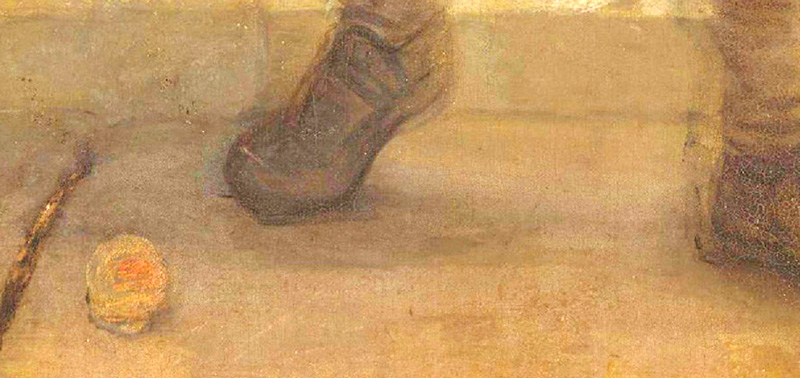
On the left, the gunpowder boy narrowly avoids being struck by the musketeer in red who, while loading his musket, just had stepped down from the stairs with his left foot and trips with his right foot over the unknown object (a ball or apple), spilling gunpowder everywhere.
Did Rembrandt place the object there to hint at a possible stumble? At least he avoided further disaster by omitting the burning wicks that the musketeer should have held between the fingers of his left hand.
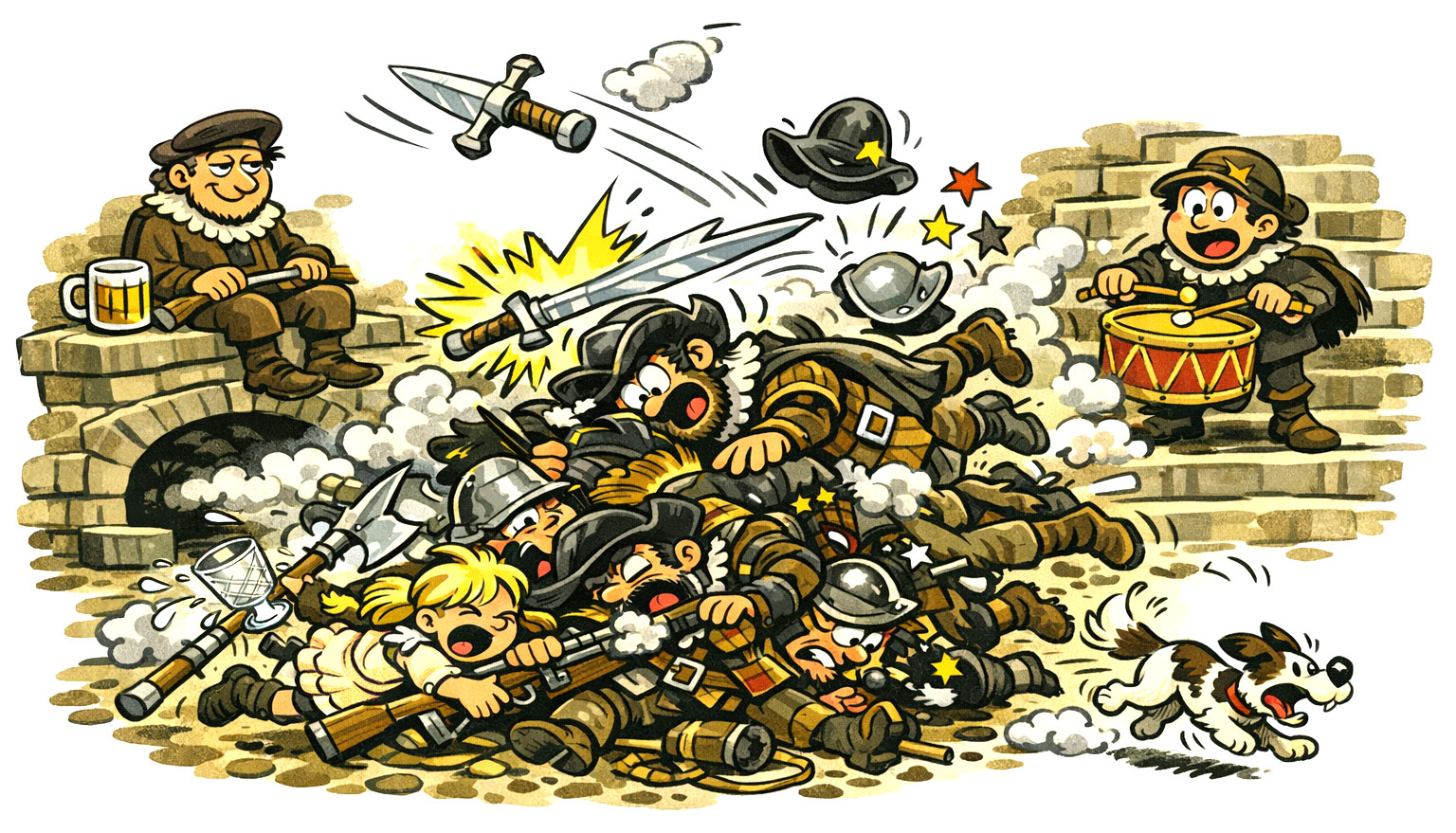
A full chain-reaction collision would have produced an entirely different kind of artwork.
Only the seated sergeant on the left and the drummer on the right remain safely in place.
From behind the ensign and shield bearer, Rembrandt watches the chaos he orchestrated.
A private joke at the expense of these status-conscious millionaires.