Jan Adriaensen Keijser (1594 - 1664), captain at arms
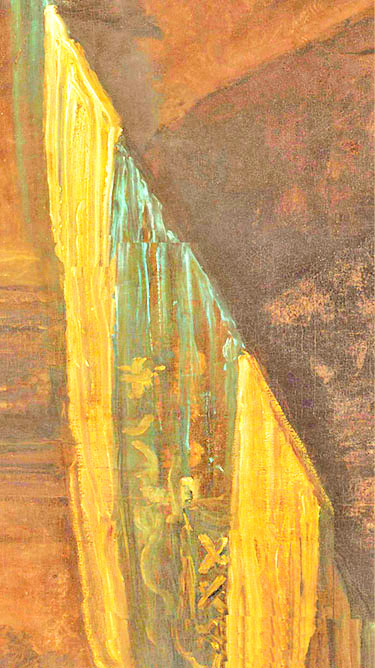
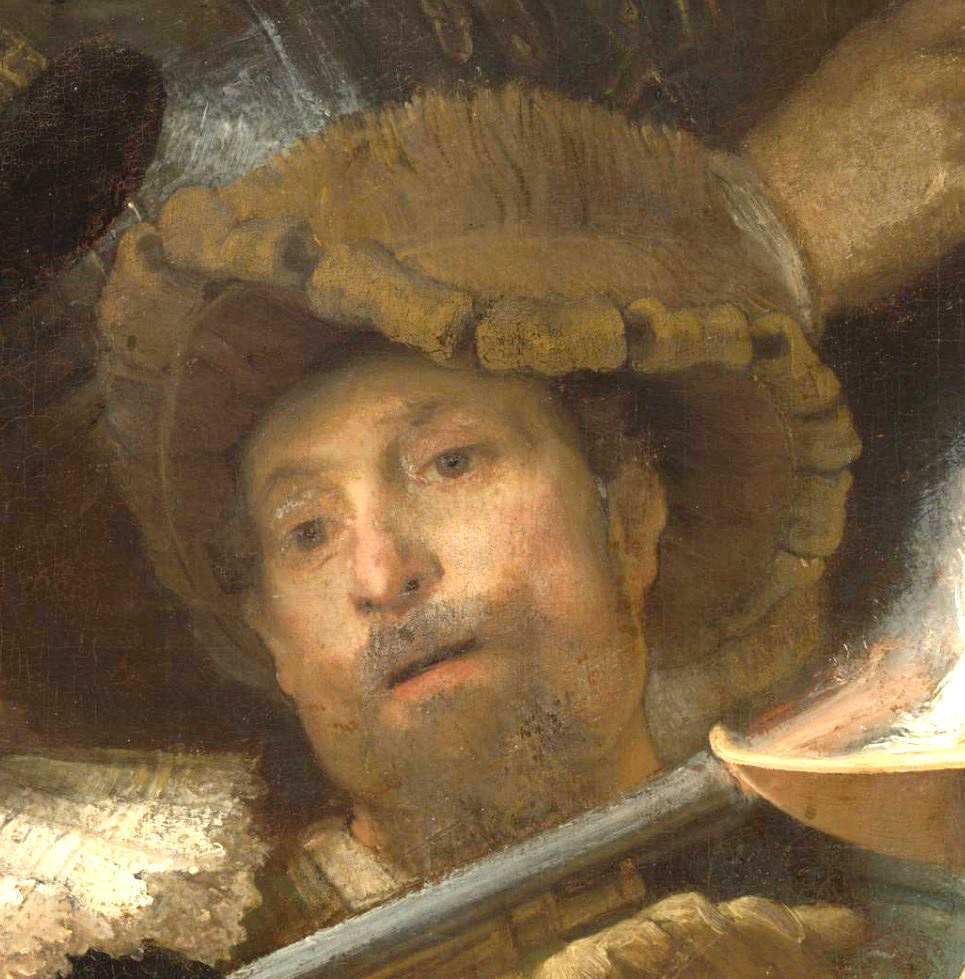
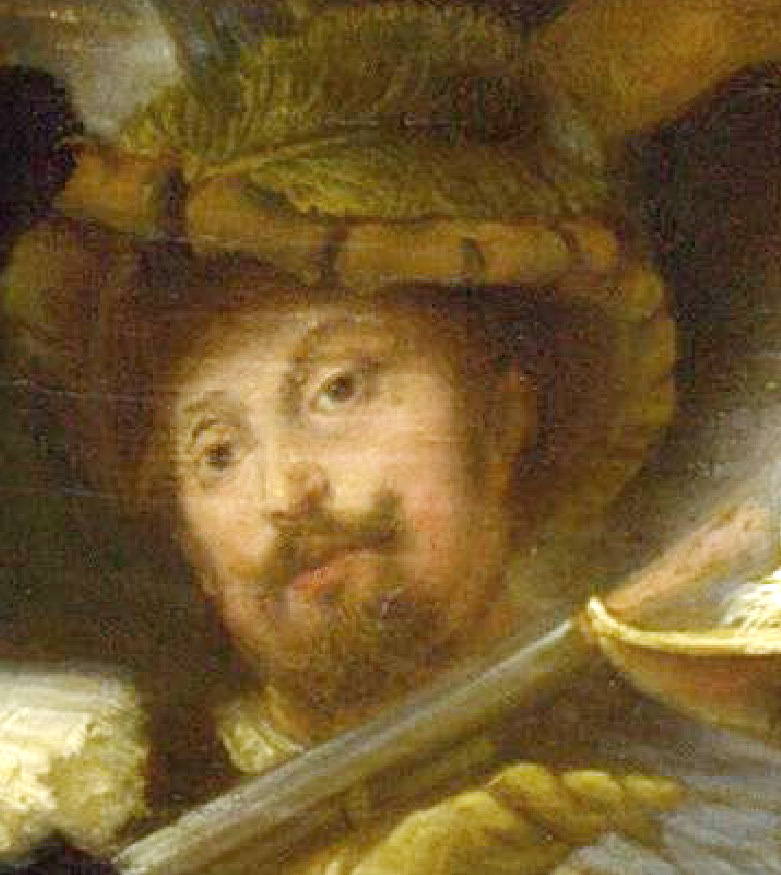
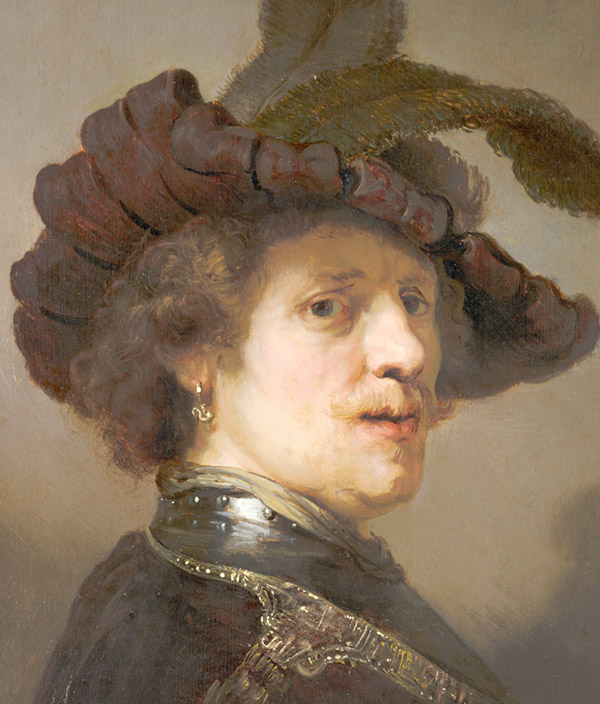
1st: Home; 2nd: by Rembrandt (1642); 3rd: by Lundens (1649); 4th: Man in feathered hat, Rembrandt (1635).
Captain at arms Jan Keijser wears an antique 16th century hat, probably one of the props from Rembrandt’s studio. Rembrandt used similar headgear in other works, such as the 1635 painting often titled Tronie of a man with feathered hat.
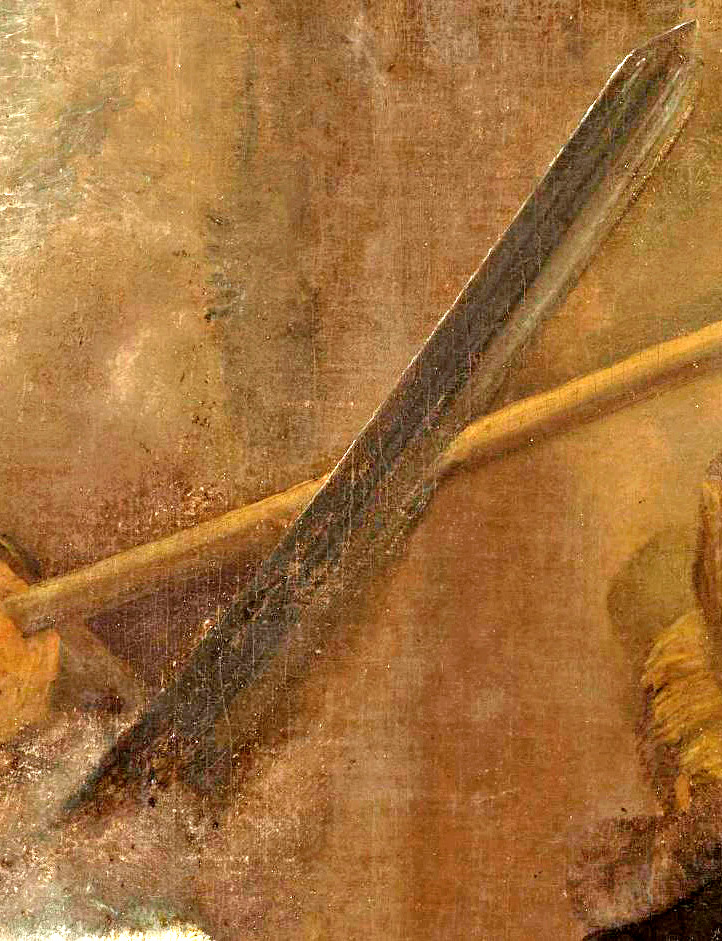
Keijser carries in his left hand a massive two-handed broadsword, nearly 1.5 meters long, its hilt wrapped with cord. It is an impressive weapon, more suited to a battlefield of the previous century than to a civic guard parade in 1642.
Keijser appears to raise his right hand in a defensive gesture against the shot fired by the oak-leaf musketeer. He may also have needed the gesture to maintain balance. His gaze is somewhat worried.
He is descending from the second step to the first, legs apart, with his right foot still on the higher level and his left foot now placed directly behind Ruytenburch21.
The descent is awkward enough without a two-handed sword, yet Keijser carries the heavy blade in only one hand.
Rembrandt may have wanted to suggest Keijser’s physical strength, but he also uses the moment to heighten the tension of the scene. The captain at arms is caught mid-movement, surrounded by flying sashes, drifting smoke, and rushing figures.
Keijser was a wine merchant, a profession that ensured he was well known, and likely well liked, across the districts of the Kloveniers. In 1654, Banninck Cocq16, by then mayor of Amsterdam, appointed Keijser manager and castellan of the Handboogdoelen.
There he exchanged the broadsword for a scepter, a more fitting symbol for a man of his standing. He held that position until his death on January 31, 1664.
Keijser had been married to Anna Garniers since 1615, and through her family he became the uncle of Anna’s sister’s son, the painter Gabriel Metsu (1629 - 1669).
Rembrandt places Keijser in a precarious position. The girl in blue08 is running toward him on the second step, while the girl in yellow09 rushes toward him on the first. The oak-leaf musketeer's14 trailing forquette lies just in front of the yellow girl’s feet. A collision with Keijser and his broadsword seems almost inevitable.
It is a remarkably dynamic00 choice by Rembrandt, who uses Keijser’s descent to anchor the swirling movement around him. The captain at arms becomes both an obstacle and a focal point, a man navigating chaos with a weapon that belongs to another age.