Willem van Ruytenburch (1600 - 1652), lieutenant
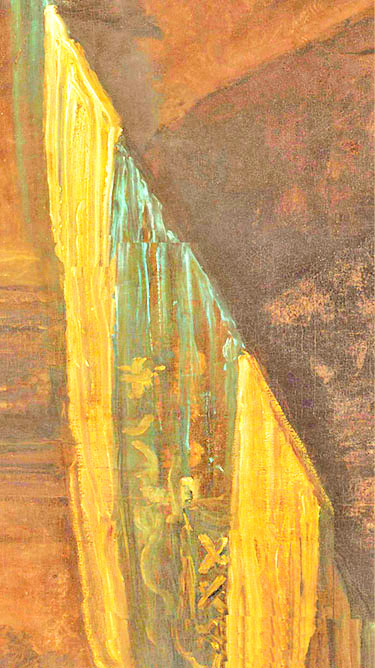
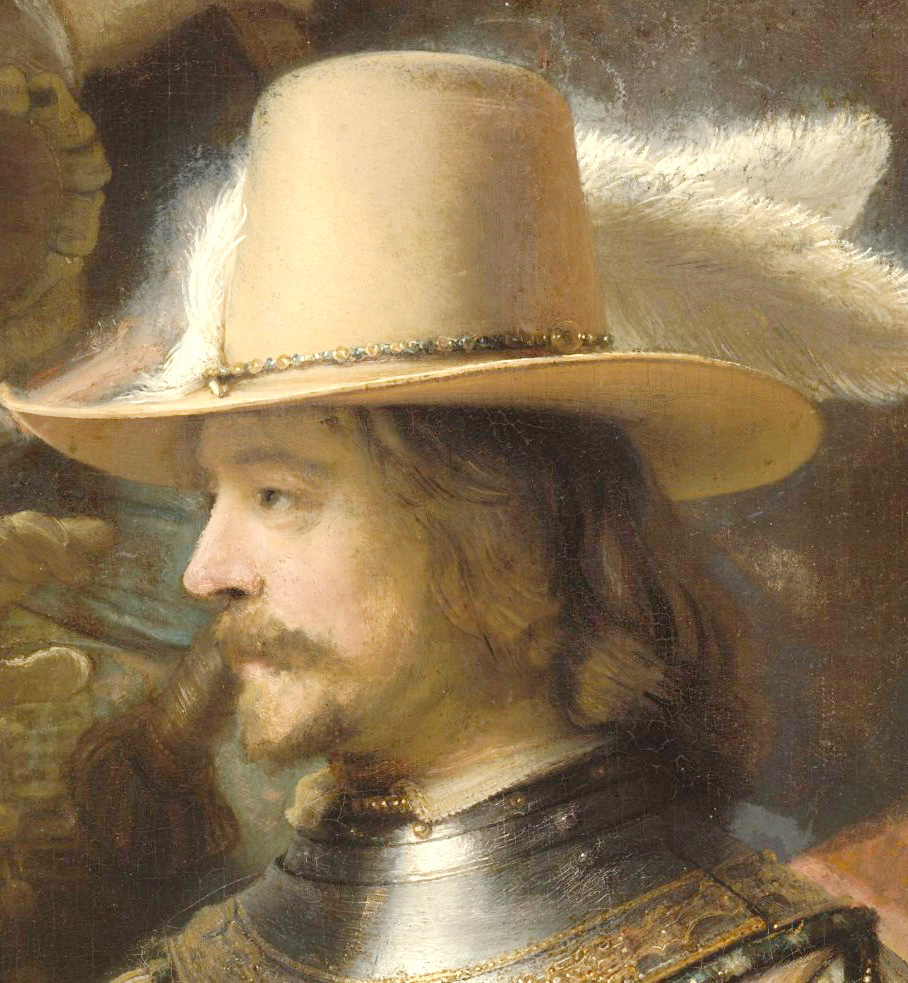
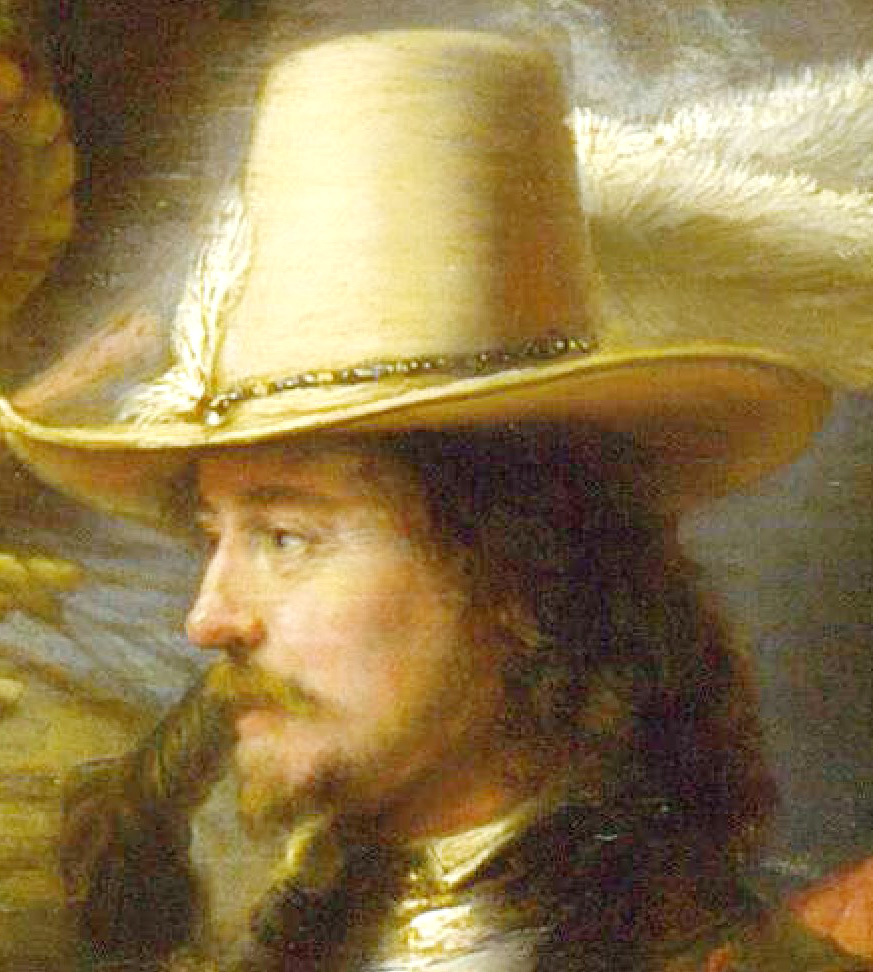
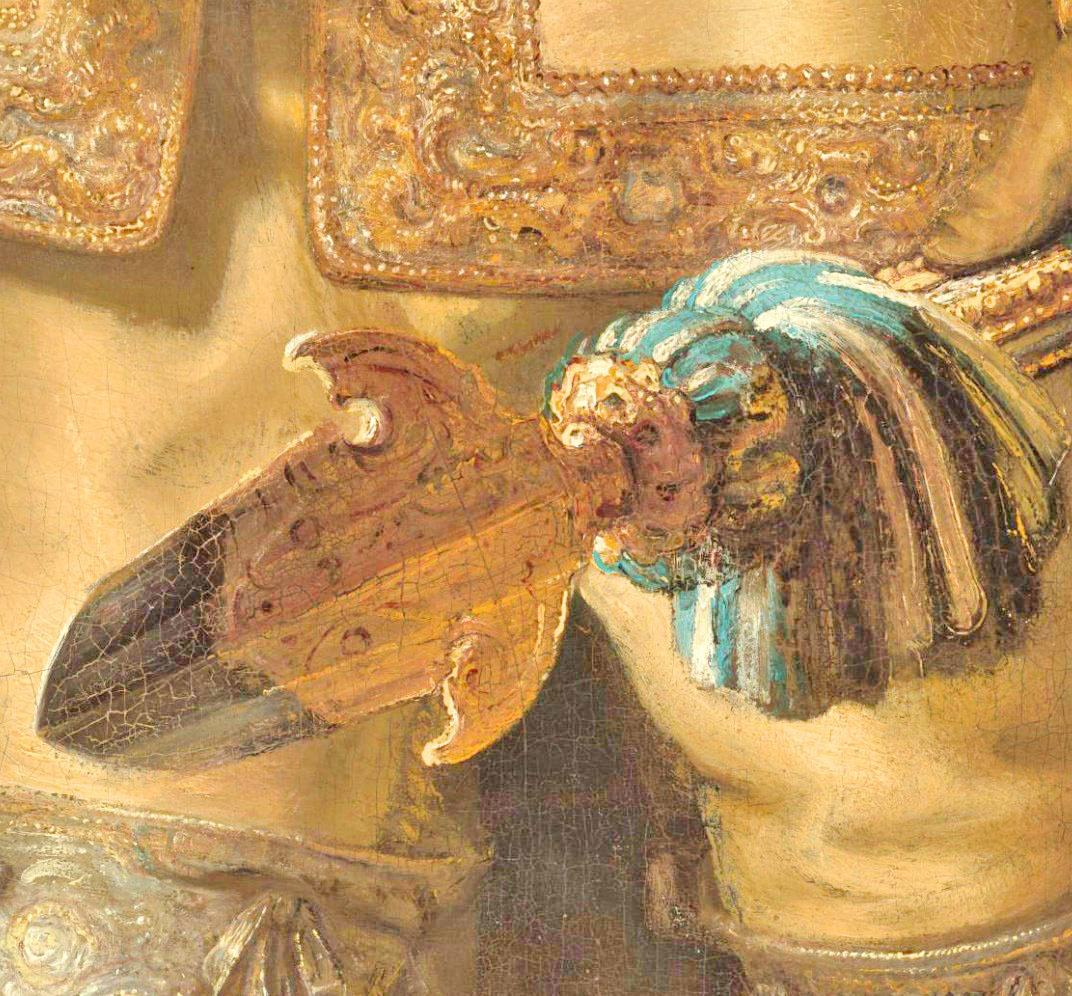
1st: Home; 2nd: by Rembrandt (1642); 3rd: by Lundens (1649); 4th: Ruytenburch's yellow/blue halberd.
If Banninck Cocq16 is the commanding presence in The Night Watch, Lieutenant Ruytenburch is the radiant counterpart. The golden tones are painted with expensive pigments, and the strong illumination on his figure creates a deliberate contrast with the captain’s darker attire.
Ruytenburch’s expression is calm which contrasts nicely with the bustle around him. A musket fires next to his ear, children run underfoot, and yet he remains composed, or perhaps simply unaware.
Rembrandt equips him with a white sash across his chest and a classic halberd, or partisan, fitted with a brush in the yellow and blue colors of the Kloveniersguild. It completes the image of an officer who is more aristocratic than martial.
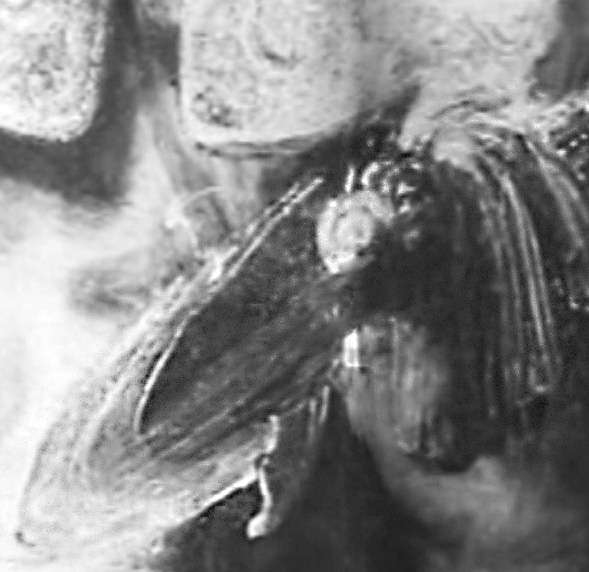
X-rays show that Rembrandt adjusted Ruytenburch’s partisan several times to achieve the best depth effect. In the final version he chose a slightly longer, flatter blade that projects more convincingly toward the viewer. The lieutenant’s weapon becomes a subtle demonstration of Rembrandt’s spatial experimentation.
Despite his aristocratic appearance in The Night Watch, Ruytenburch did not come from a regent family. His father, Pieter Gerritz (1562 - 1627), traded in spices and vegetables on the Warmoesstraat. Through shrewd investments in land, he amassed considerable wealth. In 1611 he bought, for 26,000 guilders, the title of district lord of Vlaardingen, a title Willem inherited. The family was not noble, but their prosperity allowed them to adopt the name van Ruytenburch, taken from their house on the Warmoesstraat.
In 1626 Willem married Alida Jonckheyn, who came from a wealthy family, and the couple moved into a stately home on the Oudezijds Achterburgwal. In 1639 he joined Banninck Cocq's civic guards in district 2.
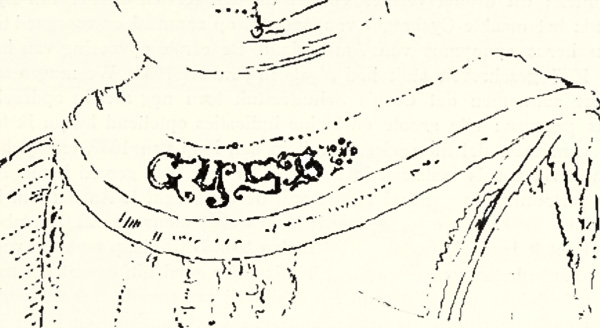
Gijsbrecht van Aemstel tragedy (Vondel, 1638)
In 1919, eminent historian and Rijksmuseum director Frederik Schmidt-Degener (1881-1941) noted a likely reference on Ruytenburch's collar to the immensely popular classic tragedy Gijsbrecht van Aemstel of renowned poet Joost van den Vondel (1587 - 1679).
The play premiered in January 1638 in the new city theatre and celebrated Amsterdam’s mythical resilience. It tells the story of the downfall of Amsterdam in the year 1300, but an angel predicts a triumphant rise for the Van Aemstel family and the city:
"before three hundred years have passed' [...] when your most famous city opens its theatre [...] the city will raise its crown to the heavens."
The audience loved the lavishly decorated play and its actors, and Rembrandt is known to have used its theatrical costumes in several sketches. Since 1641, Vondel's tragedy has been performed annually until 1968.
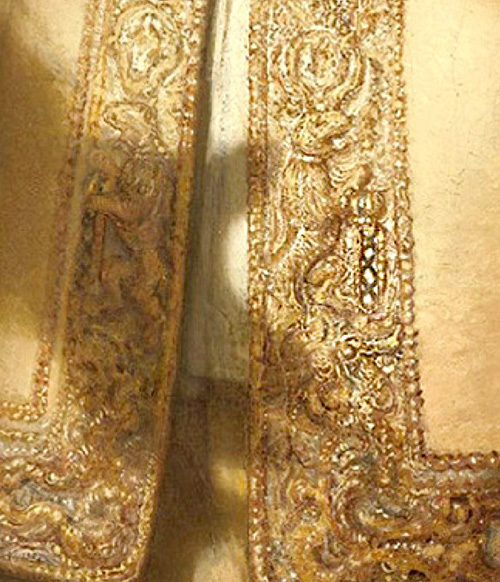
Visible to everyone is Rembrandt’s ode to the city of Amsterdam: the shadow of Banninck Cocq’s hand falls perfectly on the lion and three crosses of the city’s coat of arms on Ruytenburch’s costume. It confirms that these civic guards of district 2 are the protectors of the city.
Ruytenburch’s presence in The Night Watch is therefore both artistic and symbolic. He embodies the civic pride of Amsterdam’s elite, the theatricality of militia portraiture, and Rembrandt’s fascination with light.