Girl in yellow/gold dress

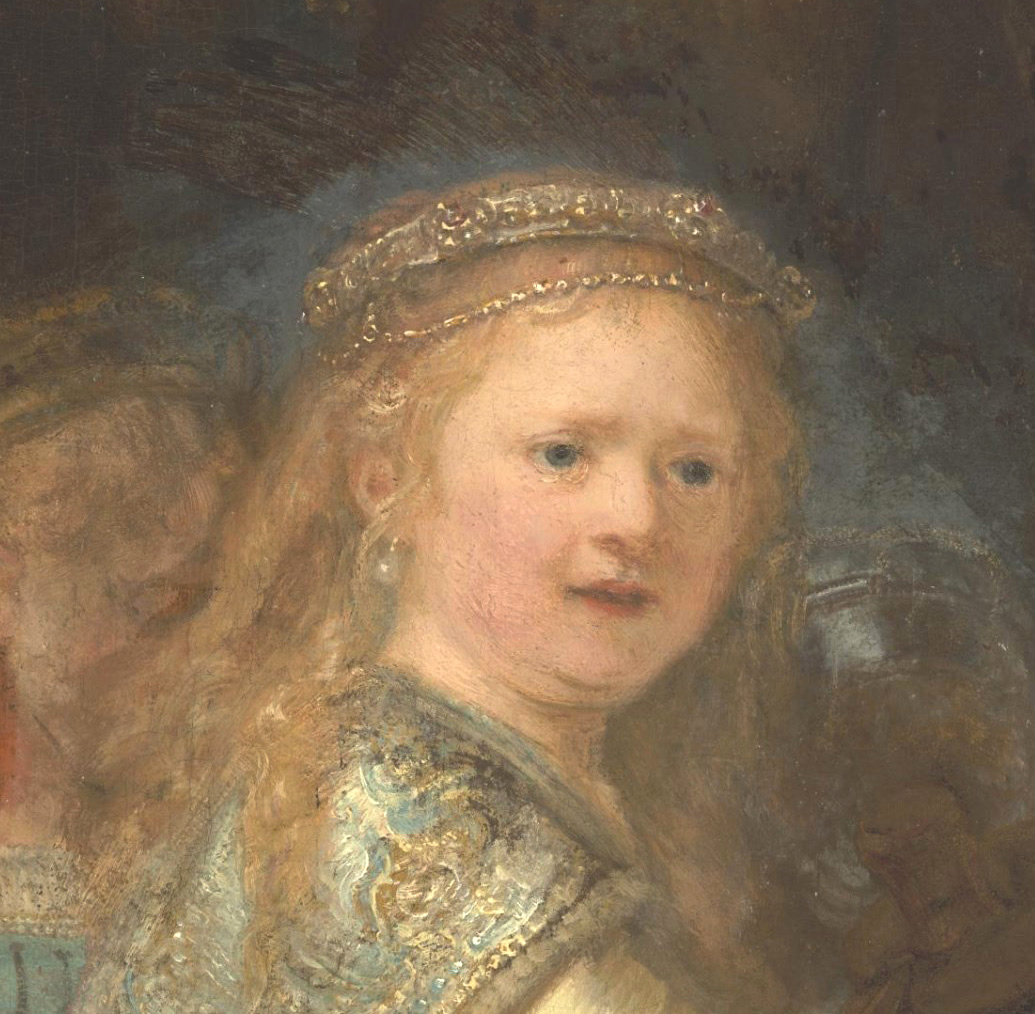
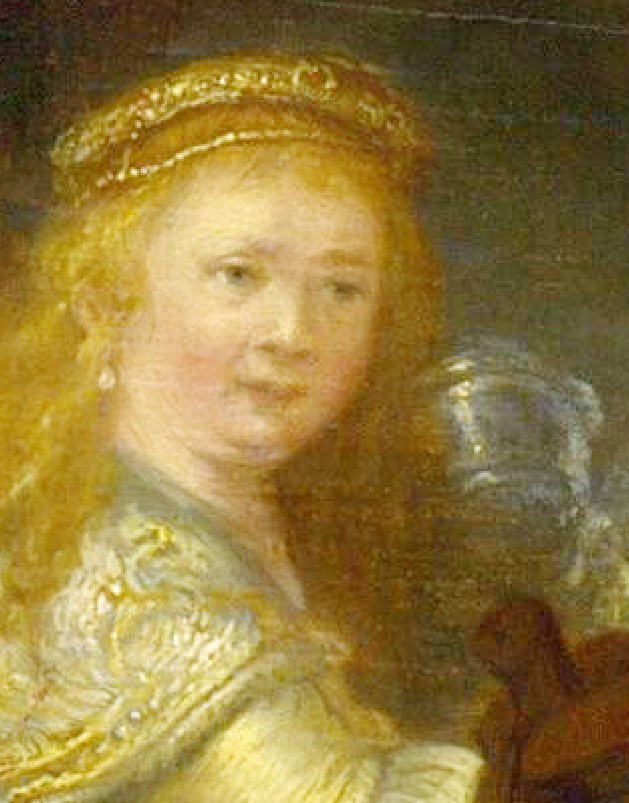
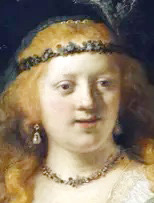
1st: Home; 2nd: by Rembrandt (1642); 3rd: by Lundens (1649). Flora (Saskia), Rembrandt (1634).
The colors worn by both girls, blue and golden yellow, are the colors of the Kloveniers guild. The girl in front is shown in a remarkably royal outfit. Her short cape, or pelerine, is decorated with gold stitching and shiny stones. Rembrandt clearly wanted her to stand out.
In her bent right arm and hand, supported by her left hand (visible in Lunden's copy), she holds a gold-decorated hanap, a ceremonial drinking cup.
Around her waist she wears a small but expensive pistol and a decorated powder horn. Not the usual wardrobe for a young girl, but perfectly suitable for the queen, or perhaps the mascot, of a rifle guild.
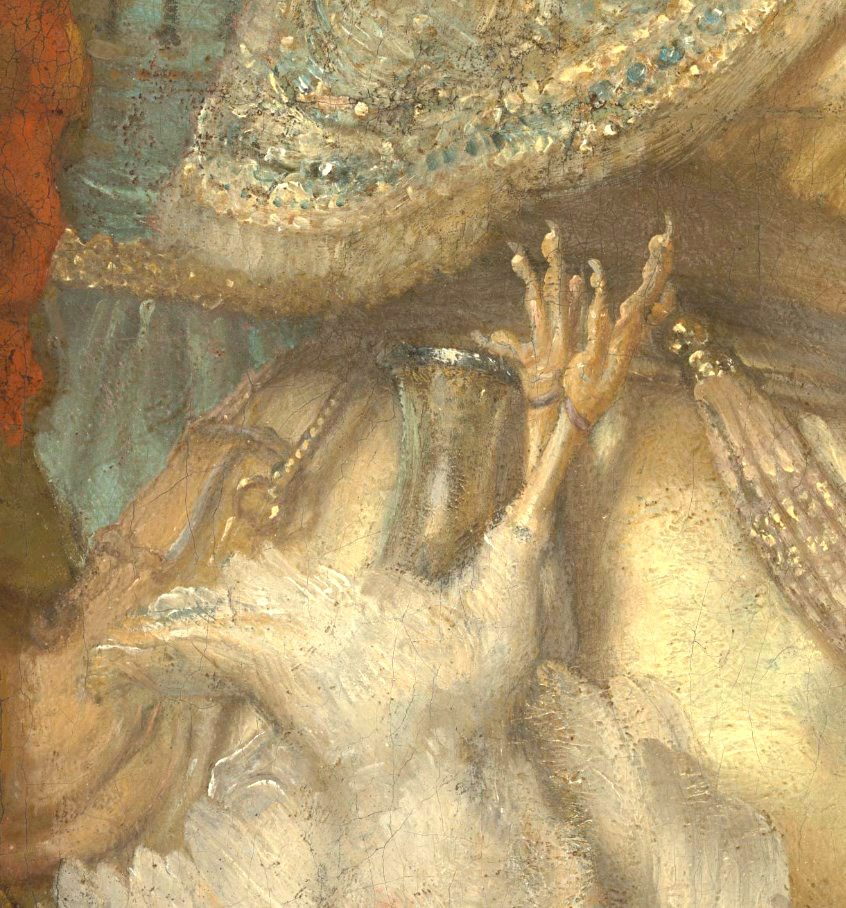
However, if Rembrandt had wanted to make a clear joke about the French word coq and the name Cocq, he would have given the bird a bright red comb and spurs, and he would not have hidden its head behind van der Heede's07 musket.
The symbol of the claws appears in other places in the guild, such as in the silverware and in the stained glass windows of the Kloveniers clubhouse.
The gold-decorated hanap served as the top prize in a shooting competition. The girl seems to look toward the young musketeer who fires his gun next to her. The best shooter in the company received a name tag with eight claws and oak leaves.The oak leaves on the helmet of the musketeer indicate that he may be the prize winner.
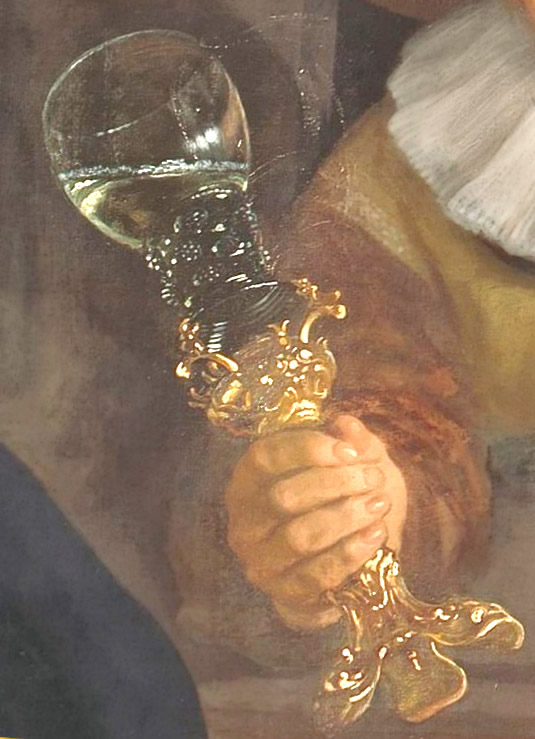
It may well be the very cup she is holding. A similar goblet appears in a civic guard painting by van der Helst (1643).
There are several theories about the origin of this beautifully lit girl. She may have been one of the granddaughters of the wealthy innkeeper of the Kloveniersdoelen. She may have been a marketer who sold goods to the militia, although her lavish clothing makes that unlikely.
Another theory is that she is a tribute to Rembrandt's wife Saskia, who died in 1642. There is indeed a resemblance to the older Saskia in the painting from 1634 (see above image), and the glass earring looks similar.
Whatever her origin, Rembrandt placed both girls in the center as an aesthetic contrast within the militia scene. Despite the richly dressed Banninck Cocq and Ruytenburch21, it is the girls who capture the viewer's attention.
It was a first. In hundreds of militia paintings, children had never been included.
They running girls add a highly dynamic00 aspect to the painting, notably given the risk that the girl in yellow/gold could trip on the forket of the musketeer in front of her right foot.