Jan Aertz. van der Heede (1610 - 1655), musketeer
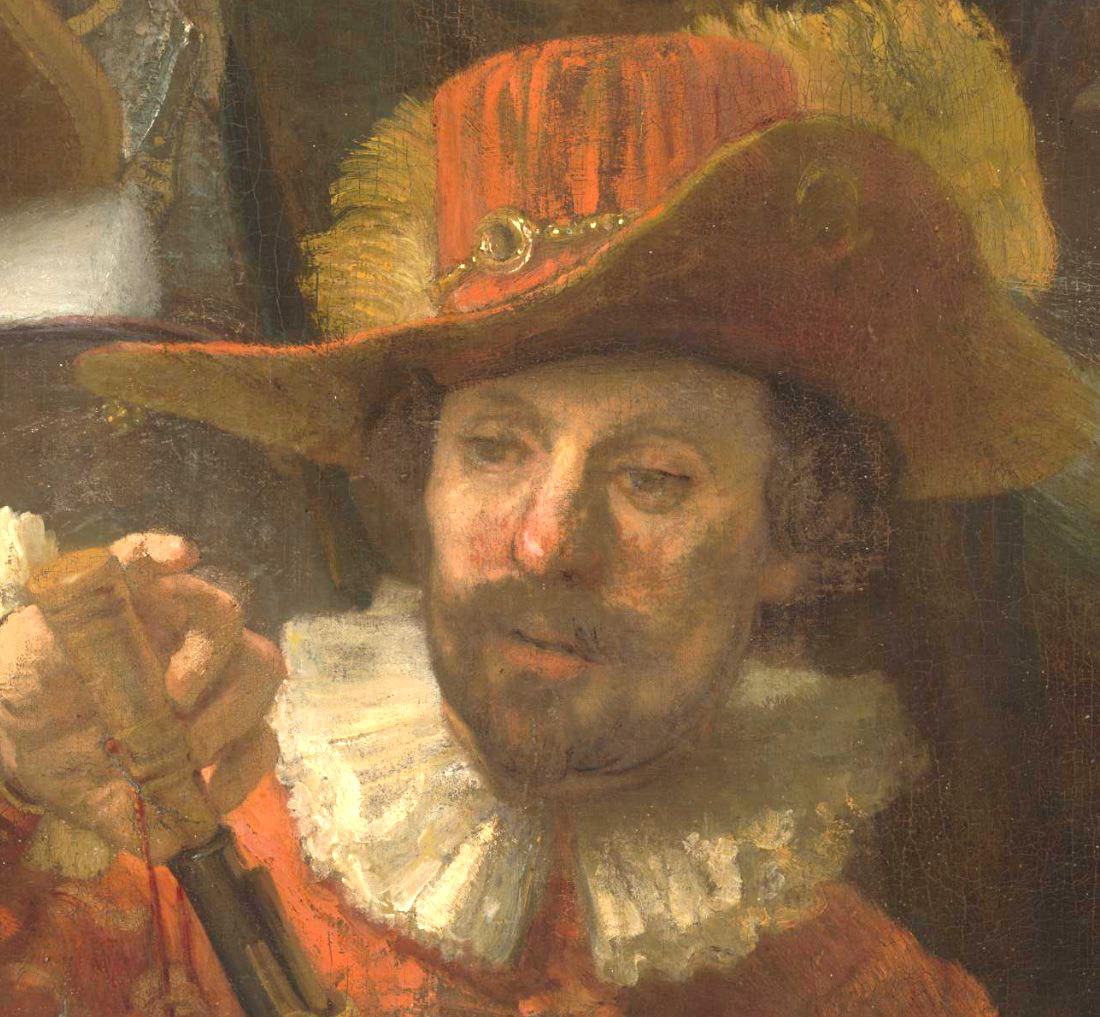
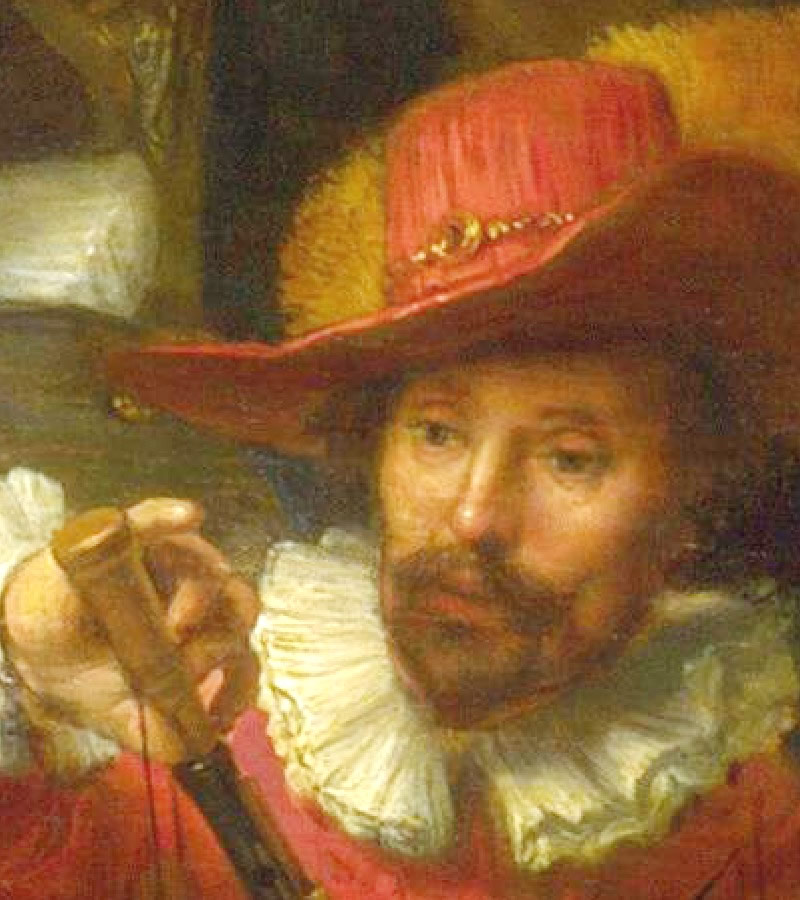
1st: Home; 2nd: by Rembrandt (1642); 3rd: by Lundens (1649).
Jan Aertsz. van der Heede (1610 - 1655) was a musketeer. He came from a Remonstrant family from Driebruggen, near Oudewater.
In the mid 1630s he opened a grocery store in the Zoutsteeg, where he sold colonial products among other goods. He became a formal resident of Amsterdam only in 1641.
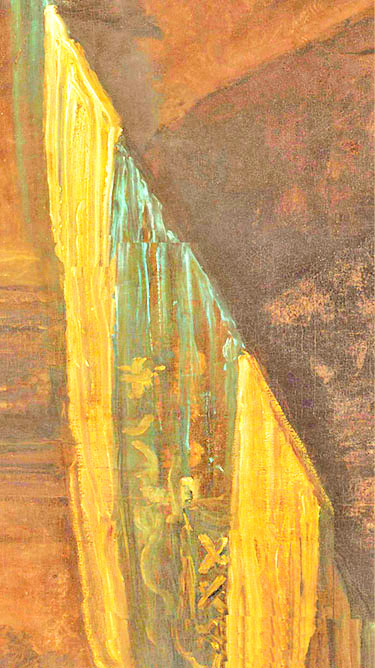
For his prominent position in the painting he probably paid more than the usual 100 guilders. His red costume dates from the 16th century, which confirms the mainly ceremonial role of the civic guards at that time.
The main figures in the painting were asked to pose in Rembrandt's studio, but not as a group. Rembrandt decided on the final composition.
Paying extra could place you closer to the front, but only within Rembrandt's overall design.
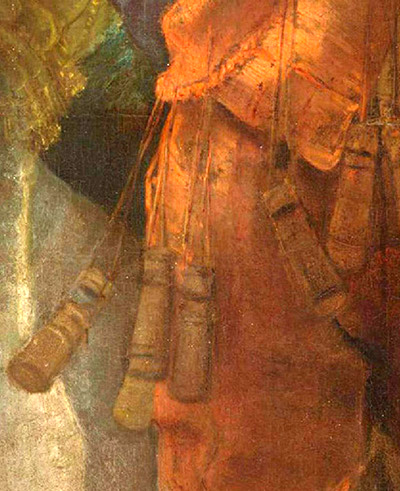
Van der Heede is loading his musket using gunpowder from a wooden bottle. One of the bottles on his belt is already empty, so Rembrandt may want us to believe this could be his second shot.
Because of the danger of accidental ignition, musketeers carried only a small amount of powder in separate powder bags on their bodies. The tradition was to carry twelve of these bags, which is why they were called gunpowder apostles.
The powder boy02 in front of van der Heede carries the horn that supplied his first amount of gunpowder.
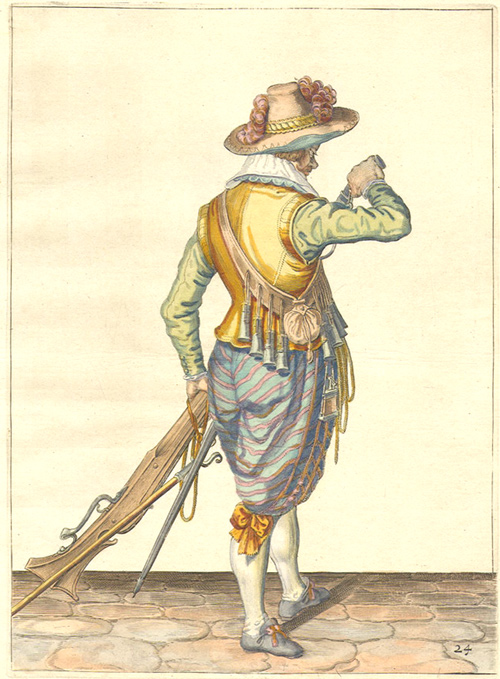
Together with Willemsen06 and Leijdeckers23, van der Heede is shown performing the tasks of a musketeer, such as loading the musket and keeping the wick burning.
Reason for this demonstration in musket handling could be Rembrandt's personal experience when his father Harmen lost the use of a hand while preparing his musket.
Rembrandt based these details on the Wapenhandelinghe, an extensive series of drawings on the use of arms by his friend, the engraver Jacob de Gheyn II (1565 - 1629).
In de Gheyn's drawings it is very clear that one should always load the gun away from others.
Rembrandt, however, shows van der Heede making several errors: he is loading his musket amidst the crowd while stepping down and turning at the same time. This was a risky action, and Rembrandt likely purposely depicted it.
Van der Heede is fully focused on loading his gun. He handles the weapon in a clumsy way, but drags his forquette behind him in accordance with de Gheyn's drawing.
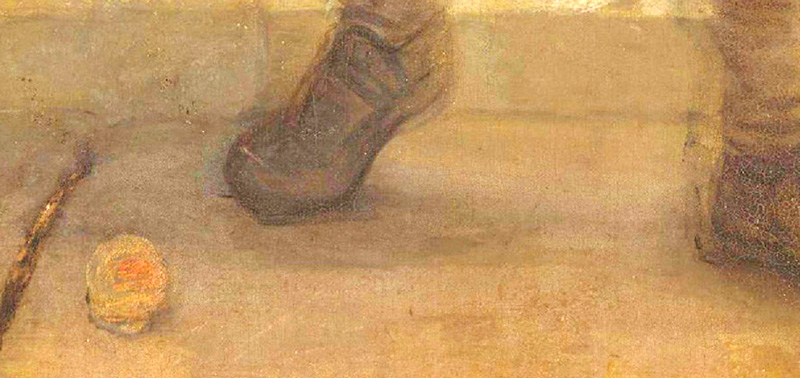
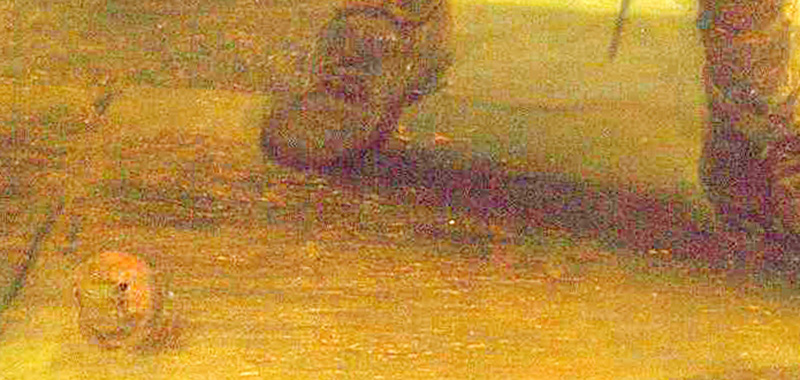
Van der Heede just stepped down with his left foot, and he will soon land with his right foot.
Loading his musket with gunpowder he is not paying any attention to where he walks.
What is the object that Rembrandt placed in front of him?
Is it an apple38, or a ball?
What would happen if he stumbled? The civic guards used only blank shots, but the effects of a misfired gun could still be severe. Perhaps this is why the powder boy turns his head. He may want to make sure he is safely out of the way if this enthusiastic civic guard makes a mistake. Another Rembrandt inside joke?
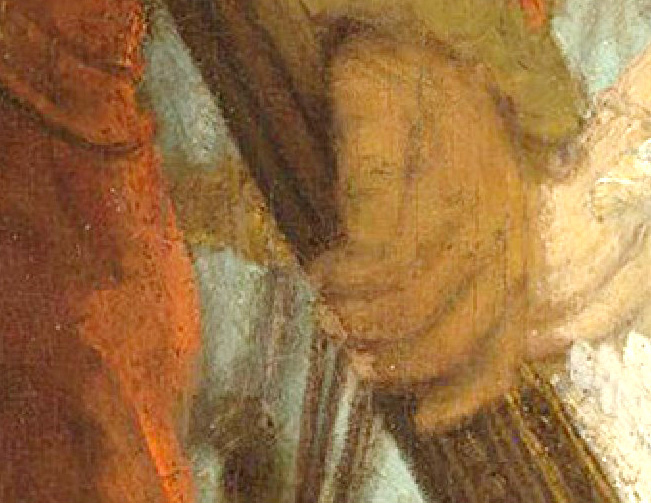
Rembrandt may have eliminated this risk by depicting van der Heede without burning wicks. These should have been kept in control by the fingers of his left hand.
However, without burning wicks it would not make sense for van der Heede to load his musket. In absence of alternative options in the weapon handling drawings by de Gheyn, this part of The Night Watch remains an enigma.