Boy, gunpowder bearer
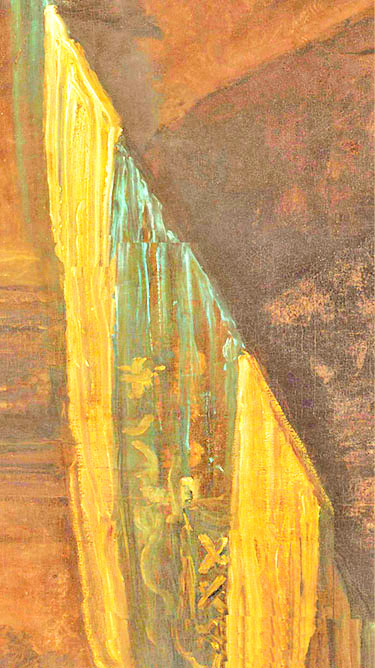
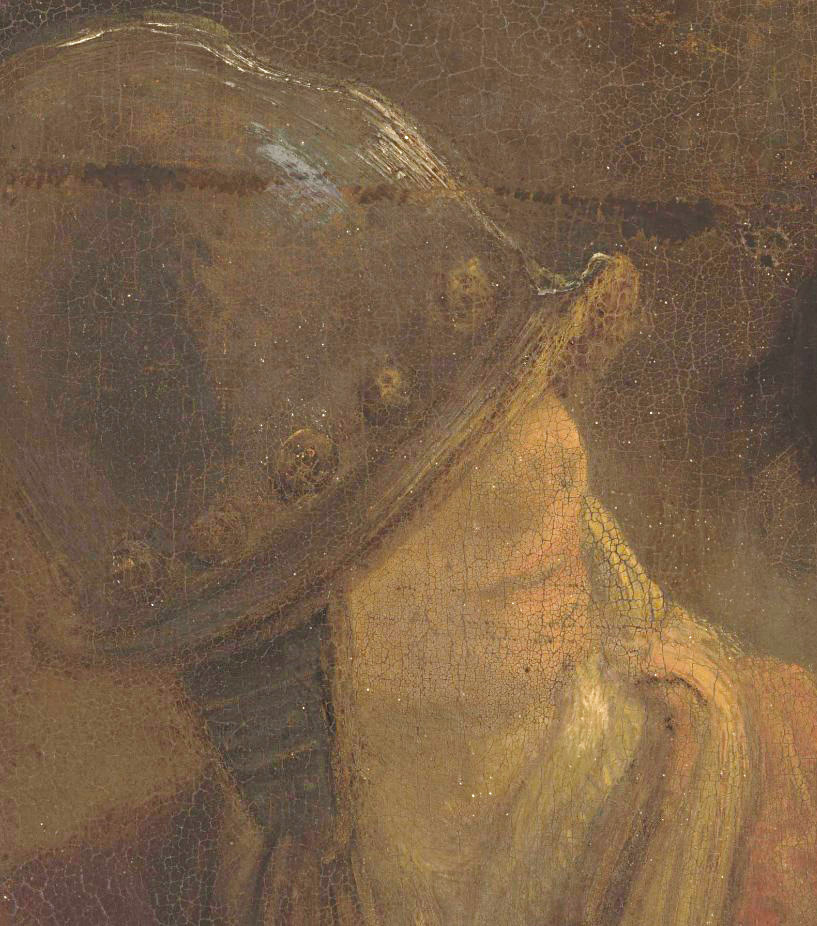
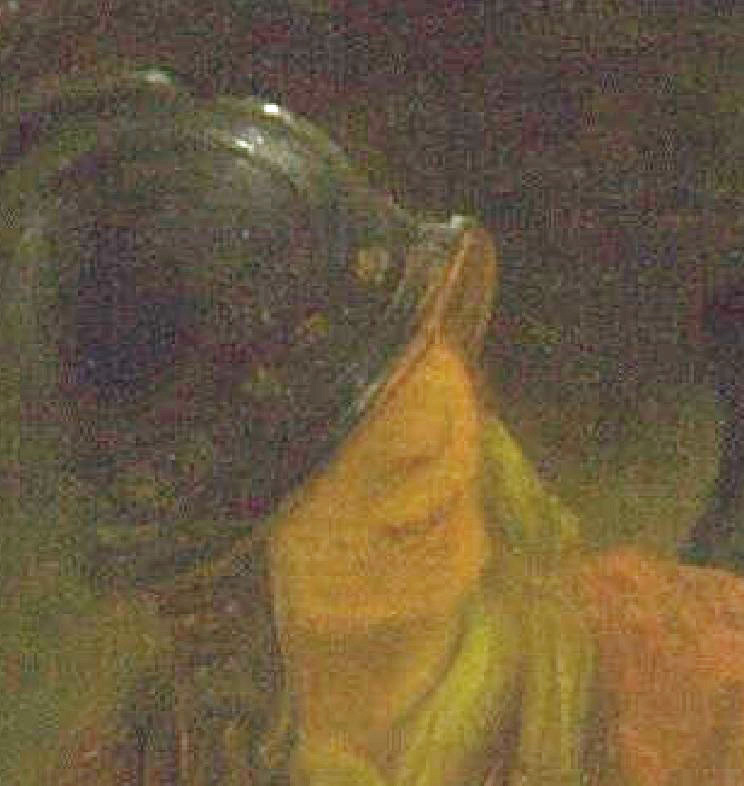
1st: Home; 2nd: by Rembrandt (1642); 3rd: by Lundens (1649).
Note on high-resolution Rembrandt-link: caused by years of smoke damage, the boy is barely visible. That's why the painting was thought to be of a nocturnal event.
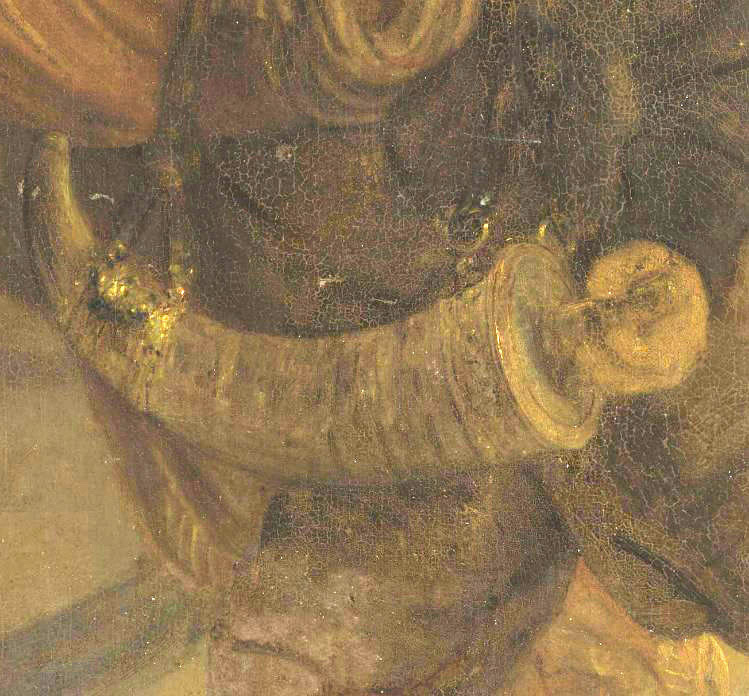
The boy walks ahead of musketeer Jan van der Heede07. He carries a powder horn.
Every civic guard company had several apprentices who helped with small tasks. For a small fee, they refilled gunpowder and assisted the musketeers.
The boy is already in motion. He is the only figure in the company who is walking at full speed. He places his hand on the bridge railing to make sure he does not stumble.
This railing disappeared in 1715 when the painting was trimmed to fit between two doors in the Amsterdam town hall.
Rembrandt makes the boy turn his head to check whether van der Heede, who seems to be loading his gun, needs extra gunpowder.
The image above shows the great amount of detail that Rembrandt painted in the boy's clothing and in the powder horn with its leather belts. Many of these details were lost during the centuries in which the painting hung in halls heated by open fireplaces.
The helmet is far too wide for his young head. It probably came from Rembrandt's studio.
The boy is one of fifteen extra figures (including the drummer) that Rembrandt added to The Night Watch. The nameplate37 above the group lists 18 names in order of rank. These are the guardsmen who paid to appear in the painting, although they had no guarantee about where they would be placed.
One civic guard regiment contained about 120 men, so most members of this district II militia company do not appear in this painting.
Across all militia companies, about eighty percent of all civic guards were portrayed in one or more paintings. Hundreds of such group portraits were made. Some guardsmen even appeared in several paintings. In Rembrandt's time, the members of the militia companies were mainly part of the elite, and they were able to pay his price, even if only once.