Elbert Willemsen Swedenrijk (1589-1644), musketeer
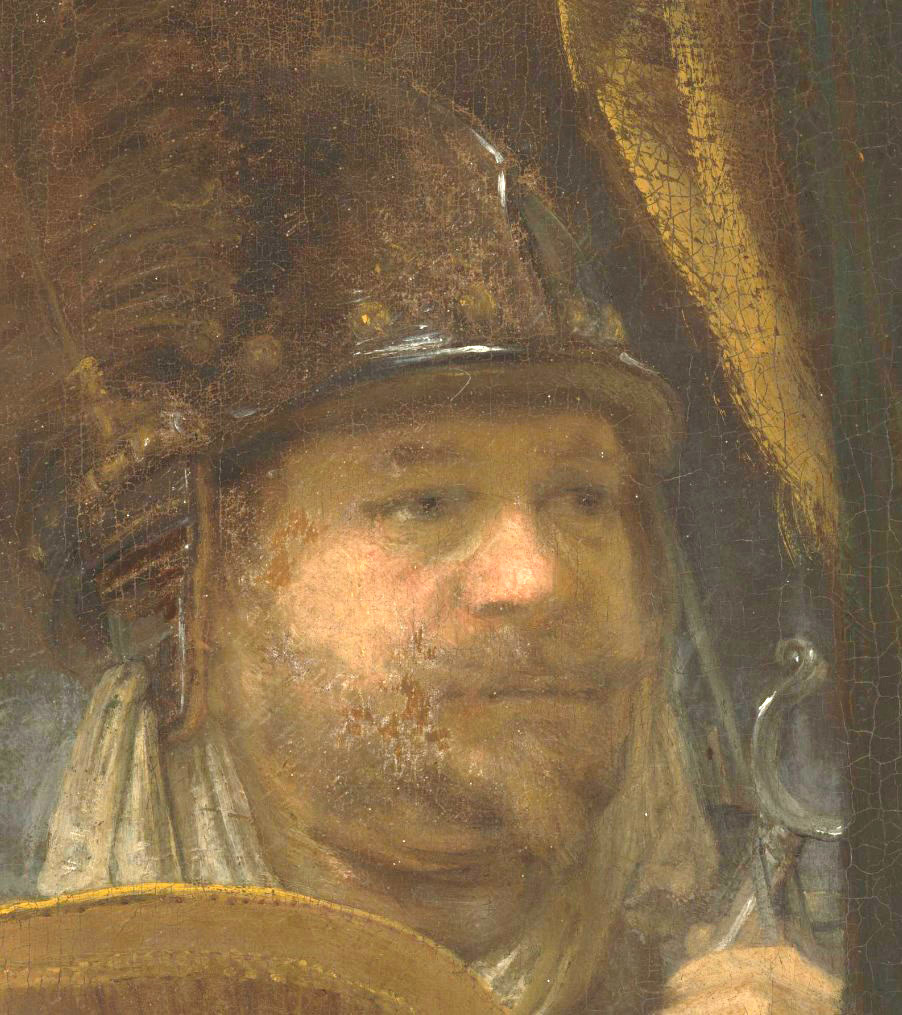
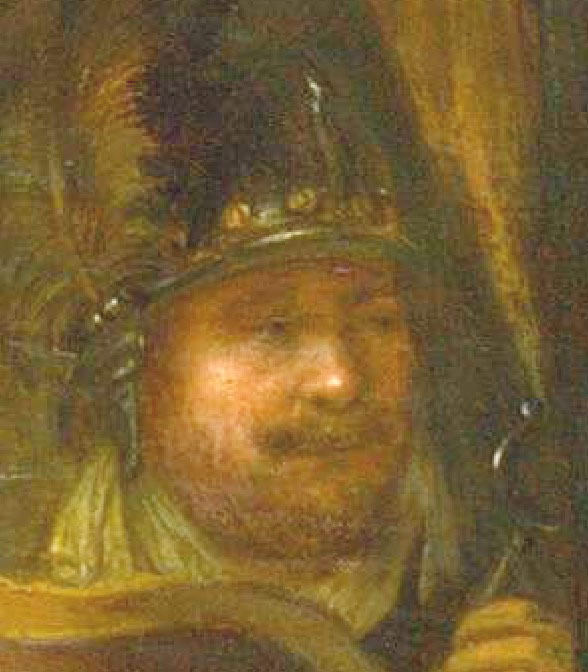
1st: Home; 2nd: by Rembrandt (1642); 3rd: by Lundens (1649).
Like most other members of district II, Willemsen Swedenrijk was a wealthy cloth merchant. He lived at Nieuwendijk 196. His grandparents had already lived in this house, which was named De Vergulde Engel, meaning The Gilded Angel.
After the death of his grandparents, his father renamed the house The Three Gilded Stockfish, in honor of the many generations of the Willemsen family who worked in the international stockfish trade.
At the time of The Night Watch, Willemsen was already at an advanced age. He was 53 years old. He died two years after Rembrandt completed the painting. As one of the paying members, his payment of one hundred guilders secured his memory for almost four hundred years, which is more than can be said of either The Guilded Angel or the Three Gilded Stockfish.
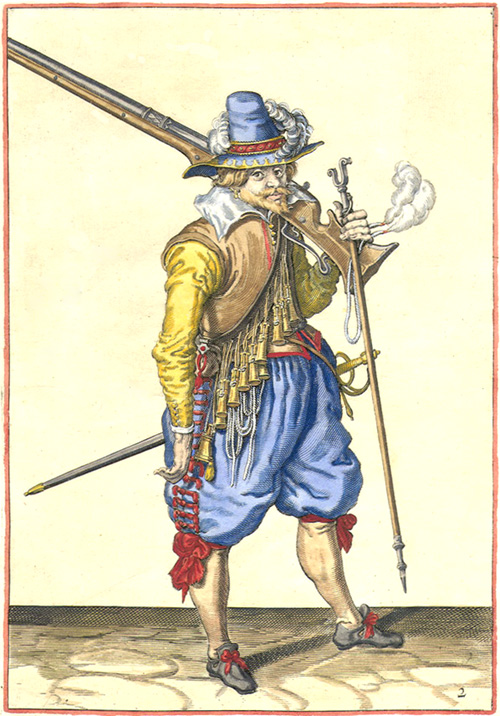
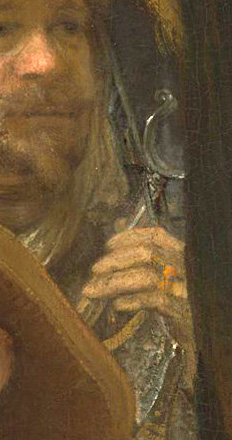
In the image above, Willemsen is shown holding one glowing end of the wick between his fourth and fifth fingers.
With his thumb and index finger, he carries the support for the musket rest, the fork-shaped stand known as the forquette.
Willemsen is one of several musketeers whom Rembrandt shows in different stages of handling the musket.
This was no coincidence. Rembrandt knew exactly how dangerous these weapons were. He grew up with the story of his father, Harmen van Rijn, who suffered a musket accident that left one hand impaired. From then on, his father's military duties were taken over by Rembrandt’s older brother Adriaen.
It is therefore entirely plausible — and very much in character — that he used his commission for The Night Watch to give the civic guards a quiet lesson in proper (or improper) musket handling. Whether they recognized the hint is another matter.
For these details, Rembrandt made use of the Wapenhaendelinghe, an extensive arms manual compiled by his friend, the engraver Jacob de Gheyn II (1565 - 1629).
For Willemsen, Rembrandt used the design called the soldier carrying his musket on his shoulder. It shows that the two burning wicks had to held in one hand. Willemsen only has one, which makes us wonder where the other end was, and if it was left out by Rembandt on purpose.