Apple or Ball?
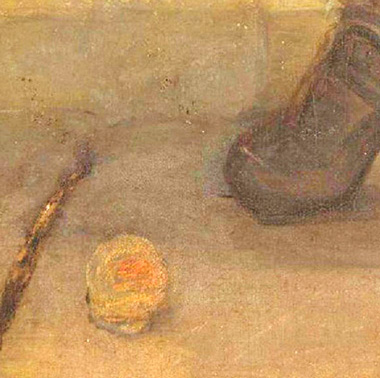
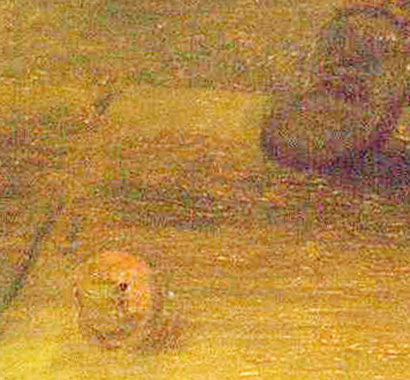
1st: Home; 2nd: by Rembrandt (1642); 3rd: by Lundens (1649)
What exactly is that mysterious object lying on the ground in front of musketeer van der Heede07? Is it an apple, a ball, or something Rembrandt dropped on the canvas on a late evening?
In Rembrandt’s original it looks convincingly like a ball. In Lundens’ copy, however, it has ripened into something far more apple-like.
Because Rembrandt’s canvas was trimmed in 1715, the apple now seems to appear out of thin air.
Lundens’ copy, fortunately, restores a bit of logic: the object may once have belonged to the toddler33 with the bumper hat, who seems just the type to lose track of her belongings in the middle of a militia parade.
Given her young age, an apple is more convincing than a ball.
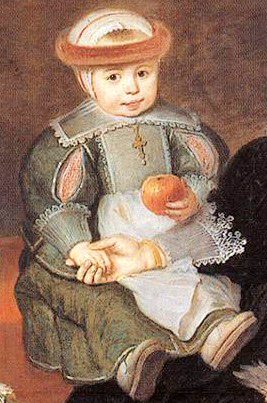
The motif was not unusual. Flemish painter Cornelis de Vos included a child with a bumper hat and an apple in a family portrait of 1630.
Rembrandt himself used a child with an apple in his etching of Jacob caressing Benjamin (c.1637), and his student Gerbrand van den Eeckhout repeated the idea in a portrait of 1656.
In all these cases, the apple is read as a symbol of good parenting and domestic harmony.
Traditionally, however, apples have also stood for the fruit of the forbidden tree in paradise, the cause of the biblical Fall of Man.
With his long experience in biblical storytelling, one might wonder whether Rembrandt slipped this apple into the scene as a gentle warning. Was he hinting at the future downfall of musketeer van de Heede, or simply adding a small domestic joke at the feet of a man who looks as if he has more pressing concerns than runaway fruit?