Rombout Kemp (1597 - 1653), sergeant
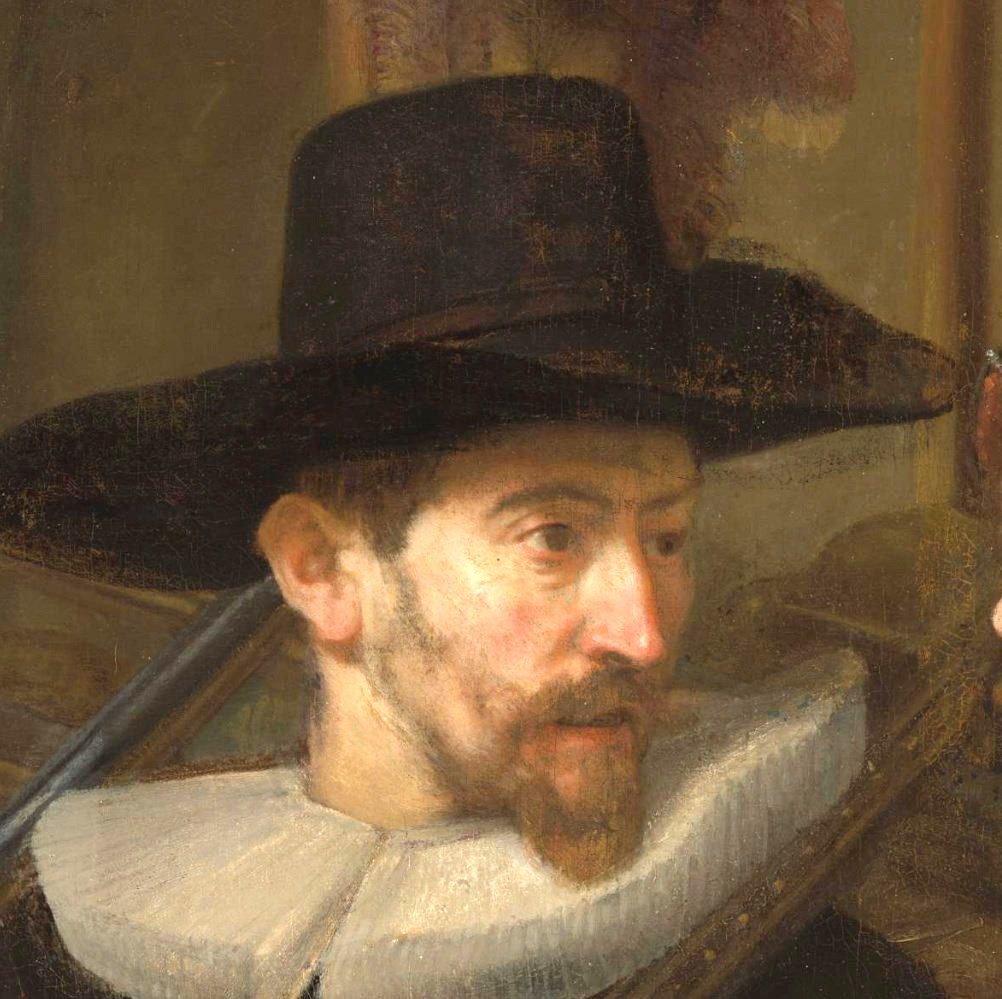
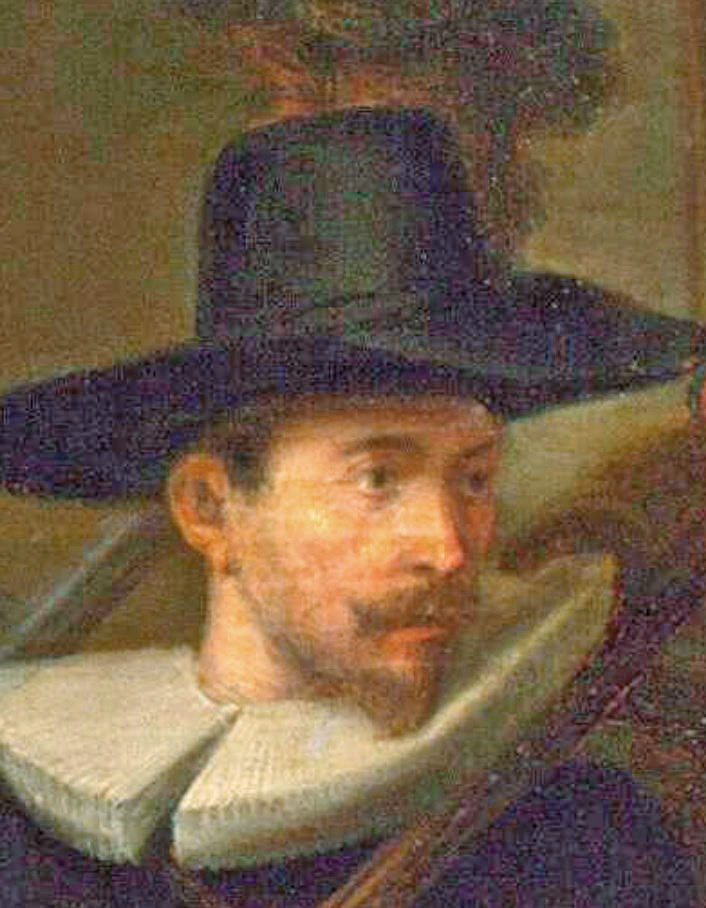
1st: Home; 2nd: by Rembrandt (1642); 3rd: by Lundens (1649).
Rembrandt placed two sergeants in The Night Watch: Sergeant Engelen01 on the left and Sergeant Kemp on the right.
Like Engelen, Kemp carries an antique halberd. Kemp’s business partner in the cloth trade was Wormskerck05, and Rembrandt may have acknowledged their partnership by giving both men wide pleated collars of finely starched linen.
These stiff collars, known as millstone collars, were notorious for their discomfort.
Following the contrast he created between the richly dressed Ruytenburch21 and the soberly attired Banninck Cocq16, Rembrandt also contrasts the two sergeants. Engelen is embellished with a winged helmet and a metal gauntlet, while Kemp is stripped of all ornament. He wears black, with a plain black felt hat, and he grips his halberd with his bare hand. The effect is deliberate: Engelen is theatrical, Kemp is functional.
Responding to Banninck Cocq’s command, Kemp calls pikeman Schoonhoven30 to begin the ceremonial exodus and swings his halberd forward and downward in a dynamic00 gesture. Engelen, seated on the small ledge of the bridge on the left, remains inactive.
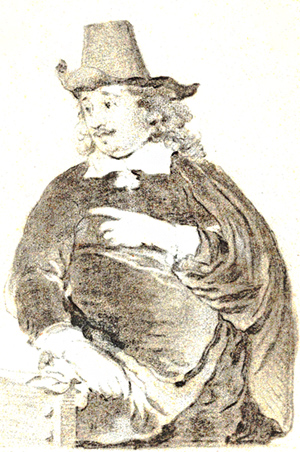
Kemp, intelligent and well educated, lived on the Nieuwendijk and had been married since 1623 to Elsje van Baersdorp, five years his junior, from a wealthy Leiden patrician family. In 1646 Kemp succeeded Ruytenburch, who had been promoted to captain, as lieutenant of the company of the 2nd district.
In addition to his roles in the cloth guild and the militia, the orthodox Calvinist Kemp served as regent of a home for the poor. His net worth was about 200,000 guilders, earned through the cloth manufacturing company he founded in 1630. With the average worker earning only 250 to 300 guilders per year, Kemp’s wealth would correspond to roughly thirty million euros today.
His fortune is further evidence that the Kloveniers militia, and many of its civic guards such as Kemp, Brugman31, and Bronchorst04, belonged to the highest social elite. Their role as guardians of the city was largely ceremonial. Only in the disaster year of 1672, when the Republic was attacked by England, France, Munster, and Cologne, did the civic guards face real military action. By then, these wealthy men were no longer alive.
Sergeant Kemp stands in The Night Watch as a figure of discipline and authority, a man whose wealth and influence were matched by his sense of civic duty, even if that duty was mostly symbolic.
Another possible figure in The Night Watch?
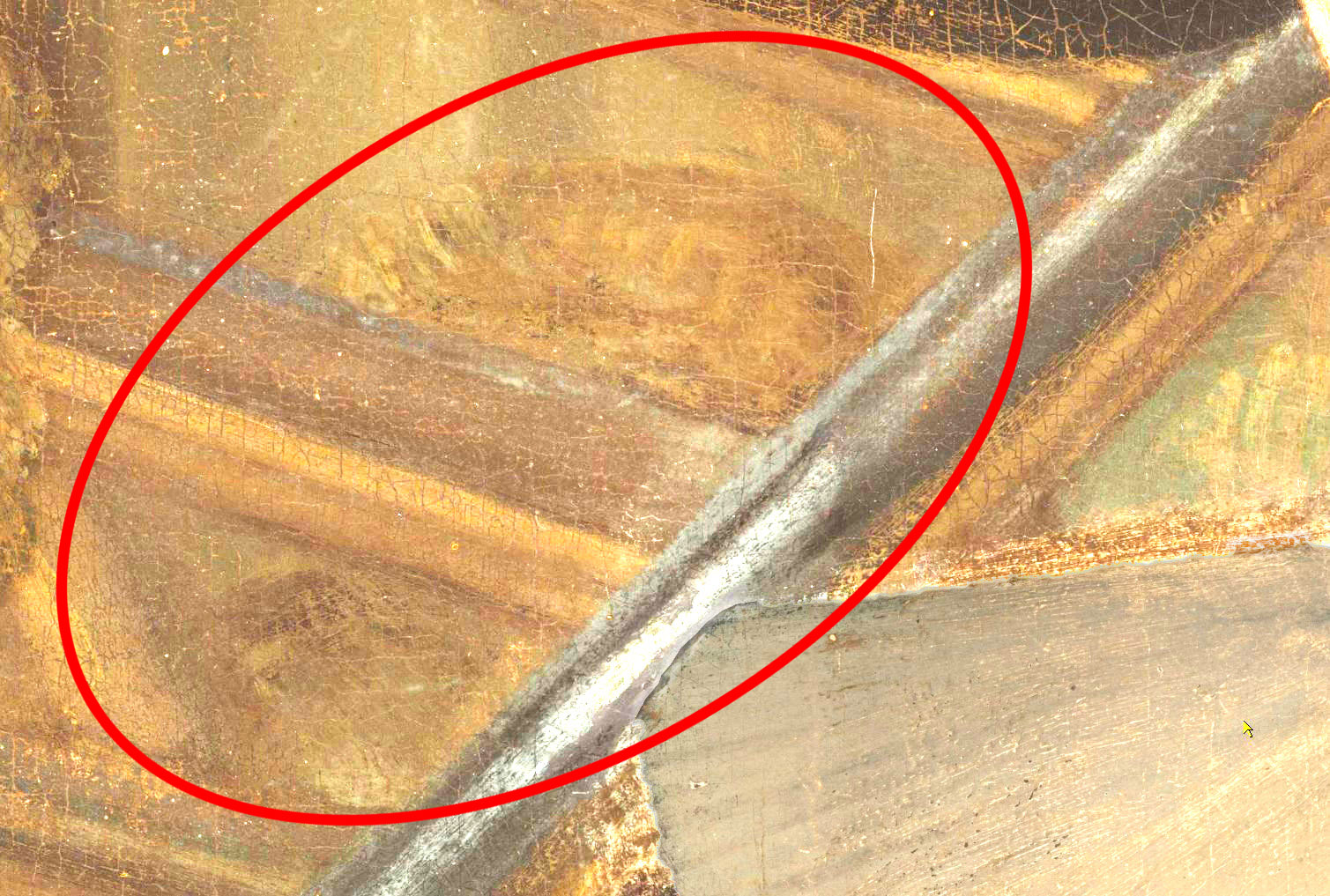
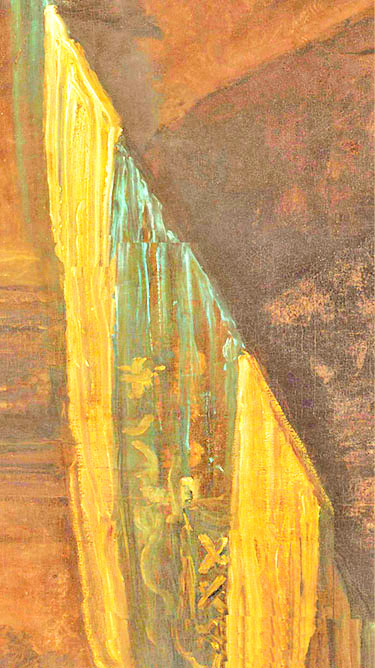
Between Sergeant Kemp and the unidentified musketeer to his right, a small patch of hair, or perhaps a helmet with feathers, or even a scrap of cloth is visible. Given the number of muskets and pikes in the painting, it is entirely plausible that several more civic guards stand in the background, if Rembrandt wished to suggest a larger company. The vague form could represent the thirty-fourth person in The Night Watch, or it may simply be a helmet resting on a shelf.
In the dark interior of the Kloveniersdoelen, copyist Gerrit Lundens could not make out this faint shape and painted it as a shadow. Rembrandt, however, may have intended it as a subtle hint of additional guards beyond the ones we can clearly identify, reinforcing the sense of a crowded, active militia preparing to march.