Reijnier Engelen (1588-1651), sergeant/pikeman

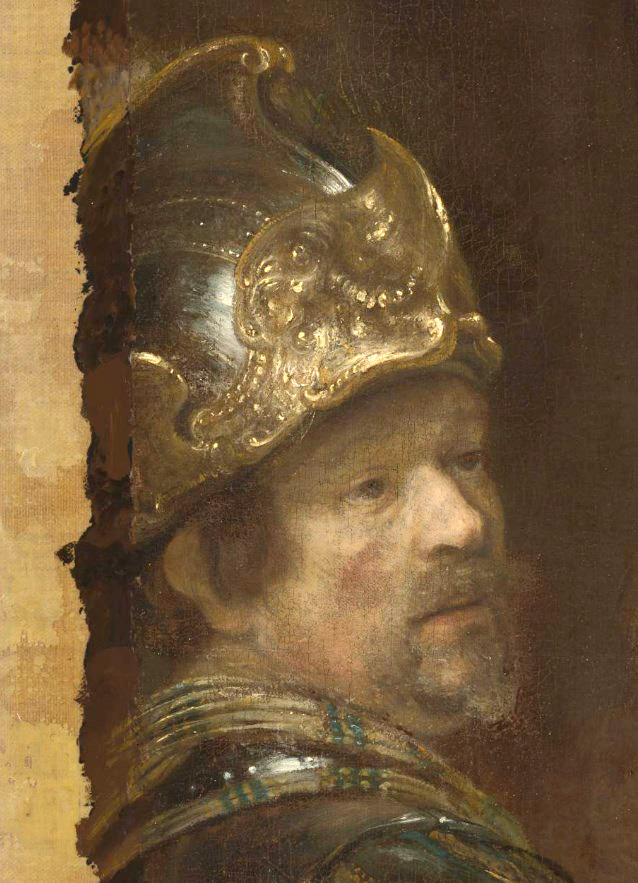
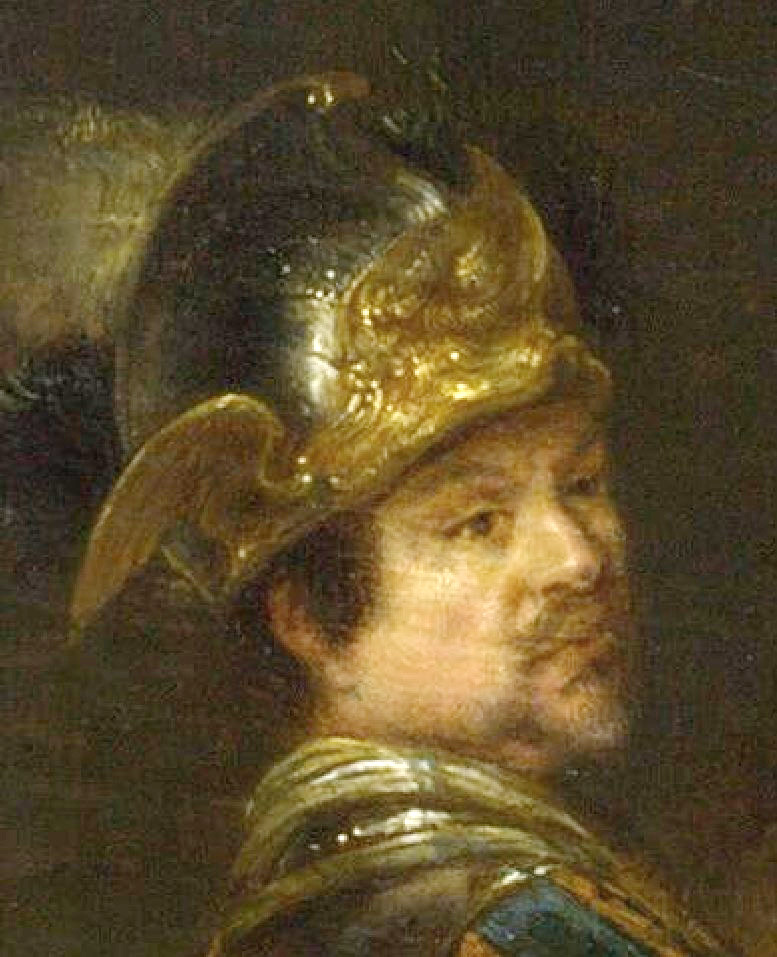
1st: Home; 2nd: by Rembrandt (1642); 3rd: by Lundens (1649).
Reijnier Engelen’s full name is Reijnier Janszoon, which means “Reijnier, son of Jan.”
In earlier centuries, many Dutch people used patronymic names. These names changed from one generation to the next. For example, a man named Pieter Janszoon could be the father of Jan Pieterszoon, but Pieter Janszoon's father could also have that name.
This system ended in 1811, when Napoleon’s Civil Code required every person to register a fixed first name and a fixed family name.
Engelen holds the rank of sergeant. His halberd, breastplate, and decorated helmet were already old-fashioned at the time of The Night Watch. They were used only for display and not for real fighting. The militia members looked like figures from an earlier period, but the public enjoyed seeing them in this traditional appearance. Although the war between the Seven United Provinces and Spain had not officially ended (the Eighty Years’ War, 1568–1648), there was no real danger of new battles, so there was no need to modernize their equipment.
Engelen worked as a cloth merchant, as many people in Amsterdam did at that time. When he was 36 years old, he was convicted for selling bed linen that was not approved and did not meet quality standards.
Engelen served as a pikeman. This was a relatively low position for a man who was 56 years old. His earlier conviction may have influenced this, but with the rank of sergeant he could carry a halberd rather than a pike. Even so, membership in a civic guard company was considered a great honor and was usually limited to members of the social elite. Shortly after The Night Watch was painted, he transferred to the 3rd Company, where he again held the rank of sergeant.
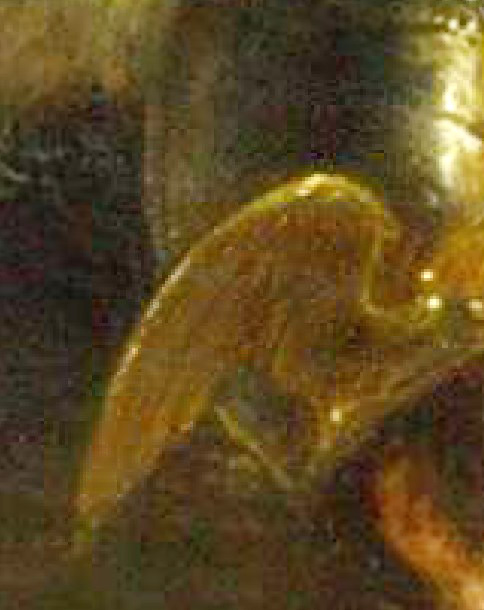
A painting by Lundens (the second image) shows the back of Engelen’s helmet more clearly. The helmet has decorative wings. Because his family name “Engelen” means “angels,” the wings are shaped like angel wings.
In the scene, Engelen is seated on the edge of a bridge section, which can also be seen in the painting by Lundens. His immense halberd come up from behind him, showing how tight his seating space must have been.
Rembrandt placed Sergeants Engelen and Kemp27 on opposite sides of The Night Watch. The sergeants were responsible for turning the captain’s and lieutenant’s commands into action. The influential Kemp, on the right side of the group and later to become the company's lieutenant, is already passing the command to his neighbor Schoonhoven30. Engelen has not yet acted; with his iron glove, he keeps his halberd upright in a resting position.
By placing the sergeants on the outer edges of the scene, the captain and lieutenant in the center, and the ensign further back, Rembrandt breaks with the usual tradition. Normally, all officers were grouped together in a central position of power.