Herman Jacobszoon Wormskerck (1590-1653), shield bearer
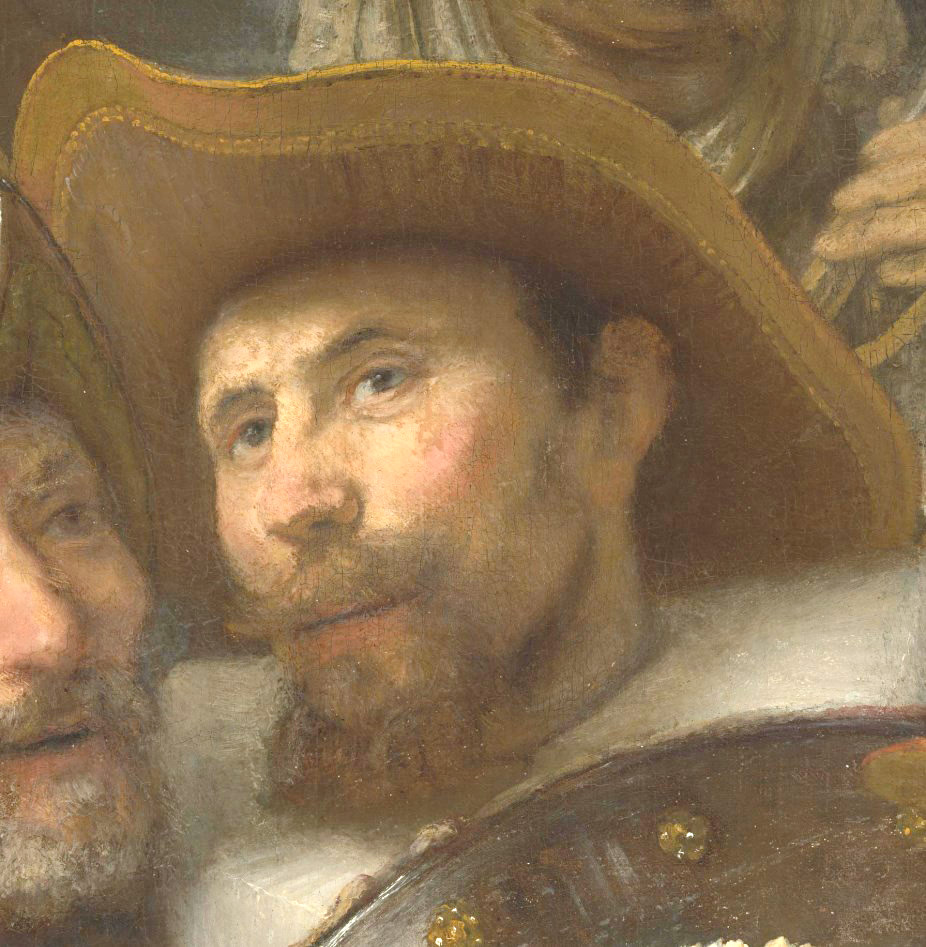
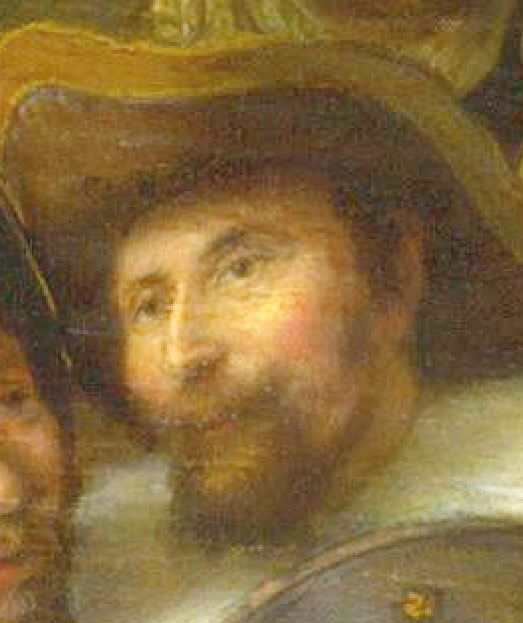
1st: Home; 2nd: by Rembrandt (1642); 3rd: by Lundens (1649).
Wormskerck was a cloth merchant and a member of the cloth merchants guild.
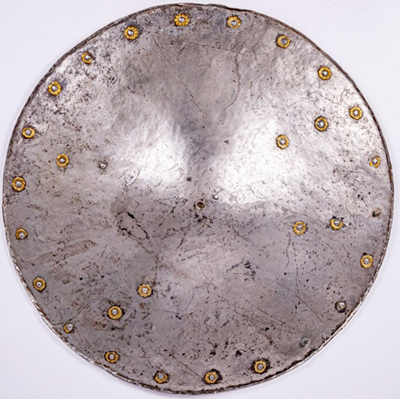
In a civic guard company, there were usually four rondassiers, or shield bearers. Their main task, in a war, was to protect the ensign, Cornelissen12.
Rembrandt shows Wormskerck and Cruijsbergen15 with both a shield and a sword. Their neighbor Bronchorst had neither of these items.
A fourth shield bearer17, who has not been identified, is probably positioned next to Cruijsbergen.
For Wormskerck, the role of shield bearer was mainly an honorary one. He stands very close to the back of musketeer van der Heede07 and to the legs of Engelen01, which are reflected on the shield. Because of this position, the shield cannot have had the strong central spine that real war shields used to have.
Rembrandt paints the shield at a substantial size, probably around 70 to 80 centimeters. This suggests it may have been a 16th century roundel or rondache. Like most of the weapons and equipment worn by the civic guards, it was likely a military relic. This shield may also have come from leftover materials from the war with Spain.
The way Wormskerck holds it would have made a smooth march toward the viewer impossible. Rembrandt probably intended this. Throughout his life he enjoyed creating visual ambiguity in his works.
Wormskerck was born in Deventer and was one of the wealthiest members of the second district. He was able to retire at the age of 51, before The Night Watch was completed.
He bought a canal house at Herengracht 166 and named it Soli Deo Gloria, meaning All honor to God. He enjoyed more than ten years of retirement. When he died at age 63, he left a fortune of 370,000 guilders. After his death, the canal house was rebuilt into its present form in 1725.
Sergeant Rombout Kemp27 was his business partner. This may be the reason why Rembrandt painted both men with a wide ruff of starched linen, also known as a millstone collar.
If we translate the wealth of these civic guards into modern terms, most of them would be multimillionaires. At the time of The Night Watch, the company functioned as a kind of social club for the elite. Older documents suggest that the main qualities required to join were a strong appetite for eating and drinking.
Notice how Lundens positions Wormskerck's head slightly higher than Rembrandt. Main cause for this could have been the reduced perspective that Lundens had while painting his copy at the Kloveniersdoelen.