Barent Harmansz Bolhamer (1589 - 1661), pikeman

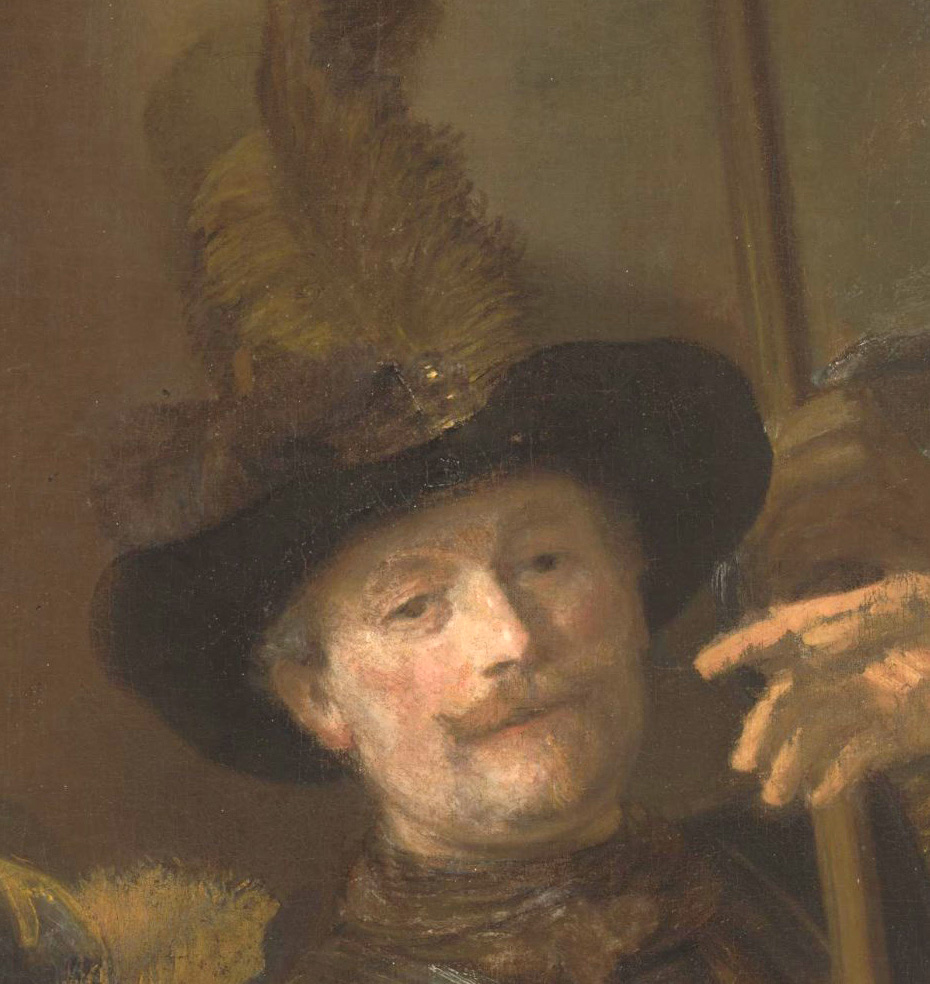

1st: Home; 2nd: by Rembrandt (1642); 3rd: by Lundens (1649).
Barent Harmanszoon Bolhamer lived on the Singel and was registered as a trader, most likely in herbs and spices. The Bolhamers formed a large Catholic family in Amsterdam, well documented in municipal deeds. Various purchase and sale records show that the family was not without means, and the hundred guilders required to appear in The Night Watch would not have posed a problem for Barent.
Together with Ockersen18, Schellingwou22, and Schoonhoven30, Bolhamer represents the pikemen of district 2.
Rembrandt paints a dozen pikes behind him to suggest the size and strength of the militia group.
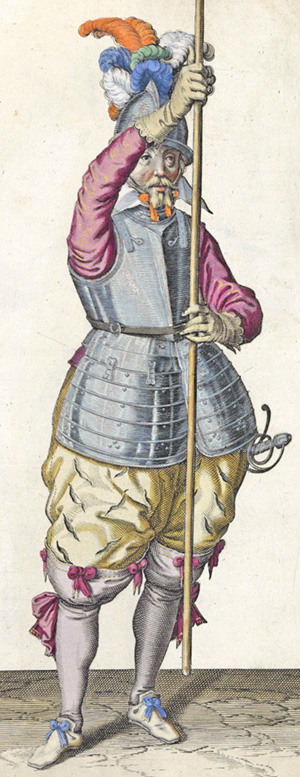
As with the musketeers, Rembrandt may have consulted the pike manual by Jacob de Gheyn to create variation in posture and handling.
Bolhamer carries his pike upright in the safe position, held firmly in both hands. He is clearly not moving anywhere; he stands as a stabilizing vertical among the swirling diagonals of the composition.
Several historians note that Barent never married, yet a woman named Alida Bolhamer eventually became his heir. The archives show that in 1658, at the age of sixty-nine, Barent hired a governess or maid. This could have been for a child, but it could just as easily have been for himself.
After his death in 1661, Alida married on February 25, 1667. According to the deed, she was fifty years old, while her husband, Joan Cornelisz van Kempen, was thirty-four. Such an age difference was unusual at a time when many people did not reach sixty.
A year later, in 1668, Alida signed a prenuptial agreement, which indicates that her net worth must have been substantial. In the following years she and her husband moved to the Gein and later to an estate they purchased in Diemen. Her financial independence and mobility suggest that she inherited a significant portion of Barent’s estate.
Was Alida, born around 1617, an illegitimate or adopted daughter of Barent? Or was she the child of another member of his large Catholic family? The records do not yet provide a definitive answer. Perhaps newly digitized archives will eventually reveal her exact connection.
Bolhamer remains one of the quieter figures in The Night Watch: a steady pikeman, firmly grounded, his weapon held correctly and safely, contributing to the disciplined backbone of the militia. Rembrandt gives him no dramatic gesture, but his presence helps anchor the composition and expand the sense of a well-organized civic force.