Jacob Jorisz (1591 - 1654), drummer
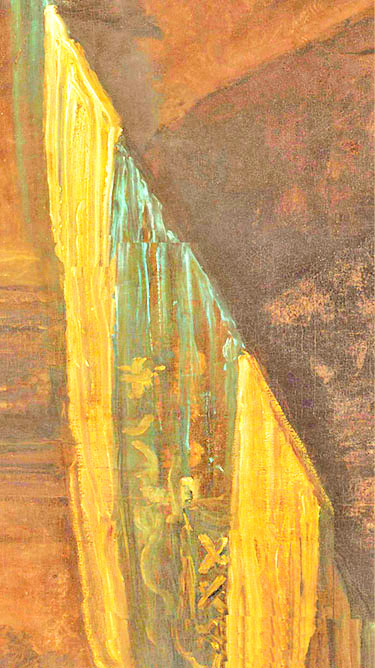
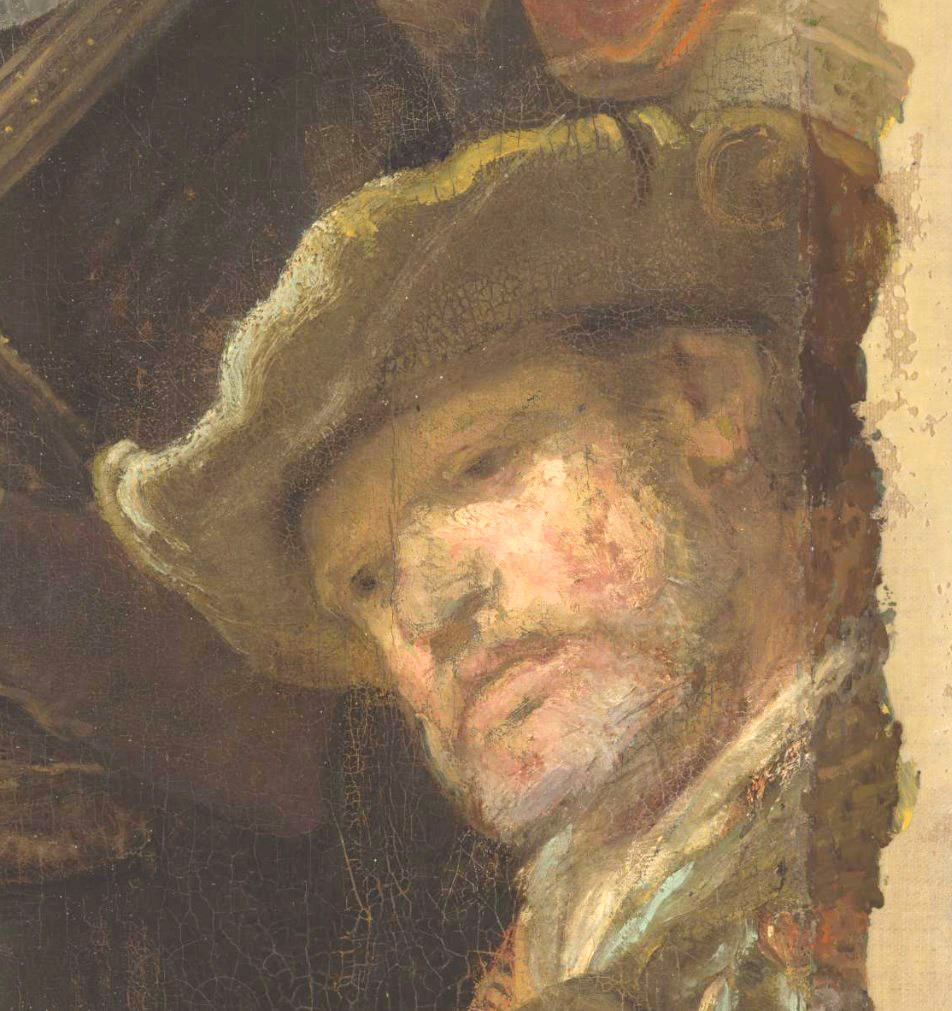

1st: Home; 2nd: by Rembrandt (1642); 3rd: by Lundens (1649);
The drummer Jorisz (the extension z meaning son of Joris) served the civic guards of Banninck Cocq's16 district 2 for an annual fee of forty guilders, plus payment for messages and errands.
This amounted to roughly one and a half months of an average worker’s salary, a reasonable sum for a side job.
His drumming was required only on ceremonial occasions.
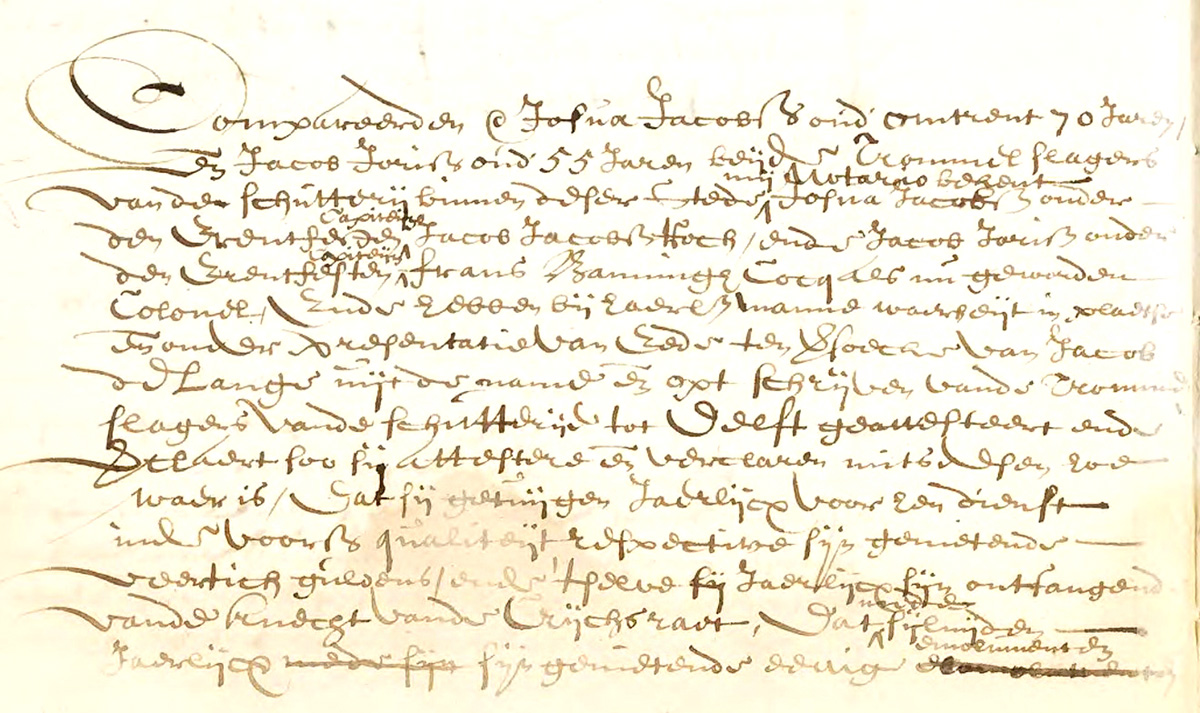
click to enlarge
However, an Amsterdam notarial record dated July 1646 documenting payment to two drummers serving in Banninck Cocq’s District 2. It was signed by Banninck Cocq.
One is Jorisz, aged 55; the other, Jacobz, is listed as about 70. Given this age difference, only Joriz fits the plausible profile for the drummer depicted in The Night Watch.
Jorisz makes no move to march. His legs and feet are locked in place, his right knee bent, his left leg forward. To take a step he would have to move his left leg including the heavy drum: a cumbersome excercise. Positioned at the far right of the painting, he appears to announce the company’s exodus with a drum roll rather than participate in it.
His sound may have been intended more for the spectators than for the guards themselves.
The civic guards were deeply invested in their presentation; they wanted to be admired, and they paid for their own equipment and clothing.
Rembrandt likely provided Jorisz with antique clothing of his own choosing. Although the drummer did not pay to be included, Banninck Cocq may have compensated Rembrandt to ensure that a drummer was represented.
The fact that Jorisz is named sets him apart from the anonymous extras Rembrandt added for compositional effect. He is the only person in The Night Watch who achieved historical immortality for free. Jorisz died in 1654 and was buried in the Zuiderkerk.
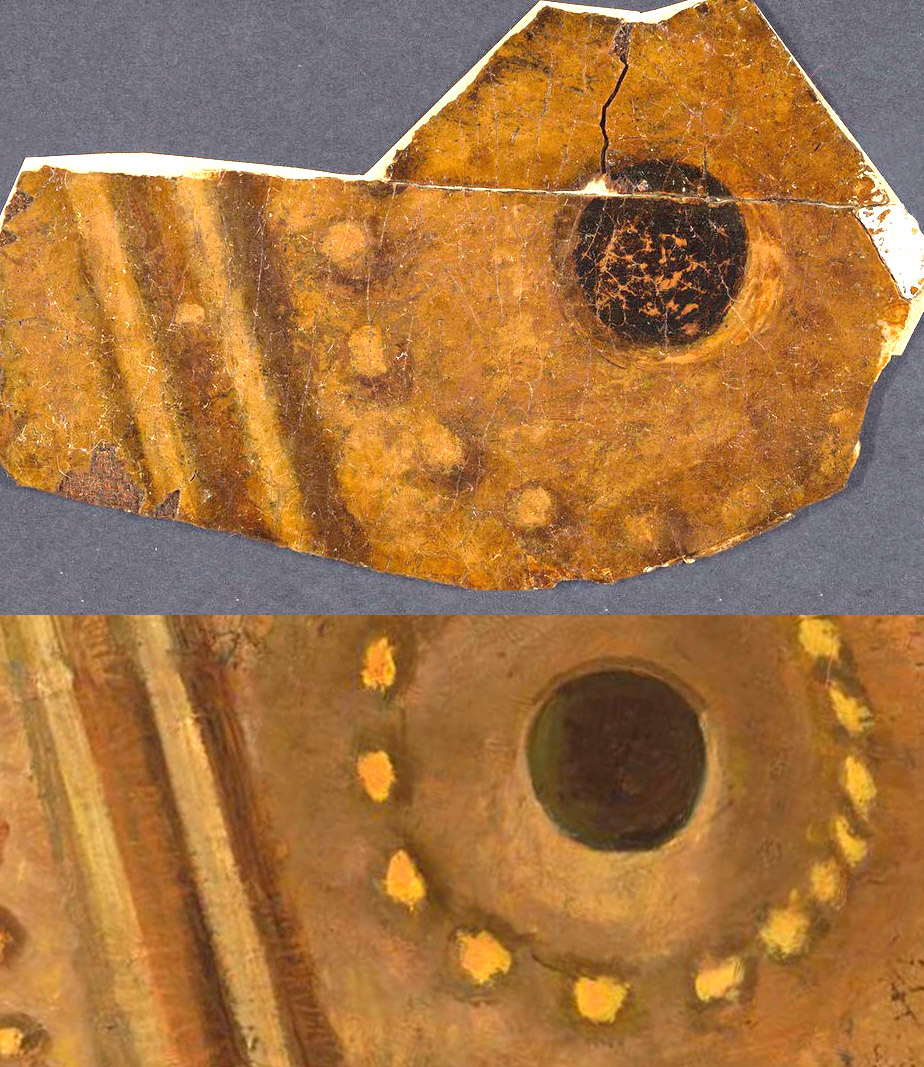
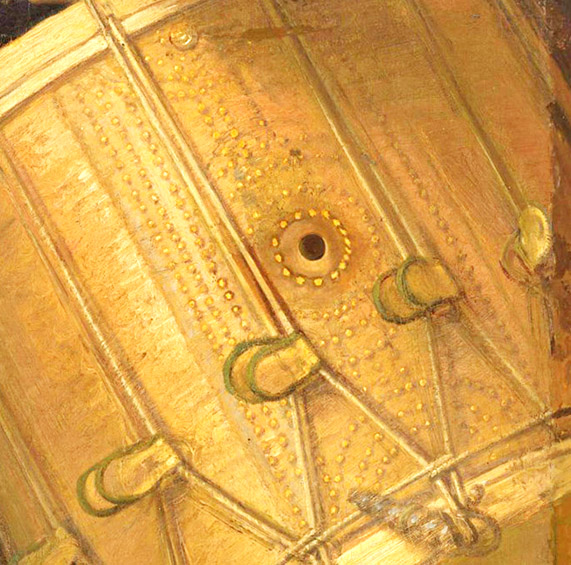
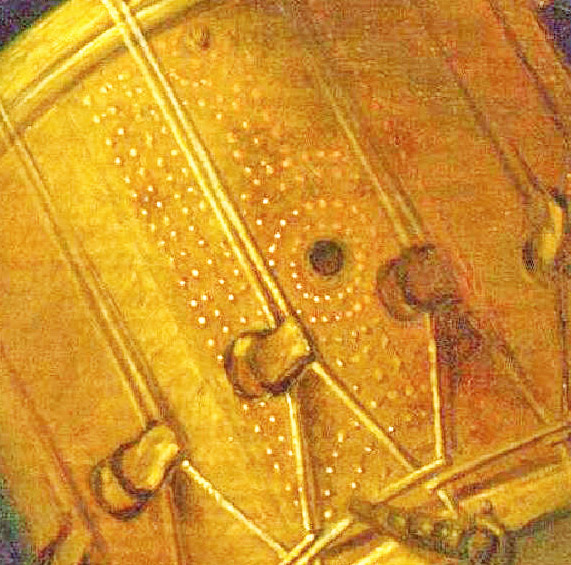
The hole in the drum is standard for this type of instrument.
In The Night Watch it was once an actual hole, though the cause is unknown.
During an early restoration it was replaced with a piece of cloth on which a hole was painted. The upper part of the drumhead image, with an extra dot between the two left lines, is canvas from an earlier restoration; the lower part is a newer insert in the current painting.
Drummer Jorisz stands as a vivid reminder that not every figure in The Night Watch was wealthy or influential. Yet through Rembrandt’s brush, even a modestly paid musician became part of one of the most celebrated paintings in the world.